Last updated November 21, 2026
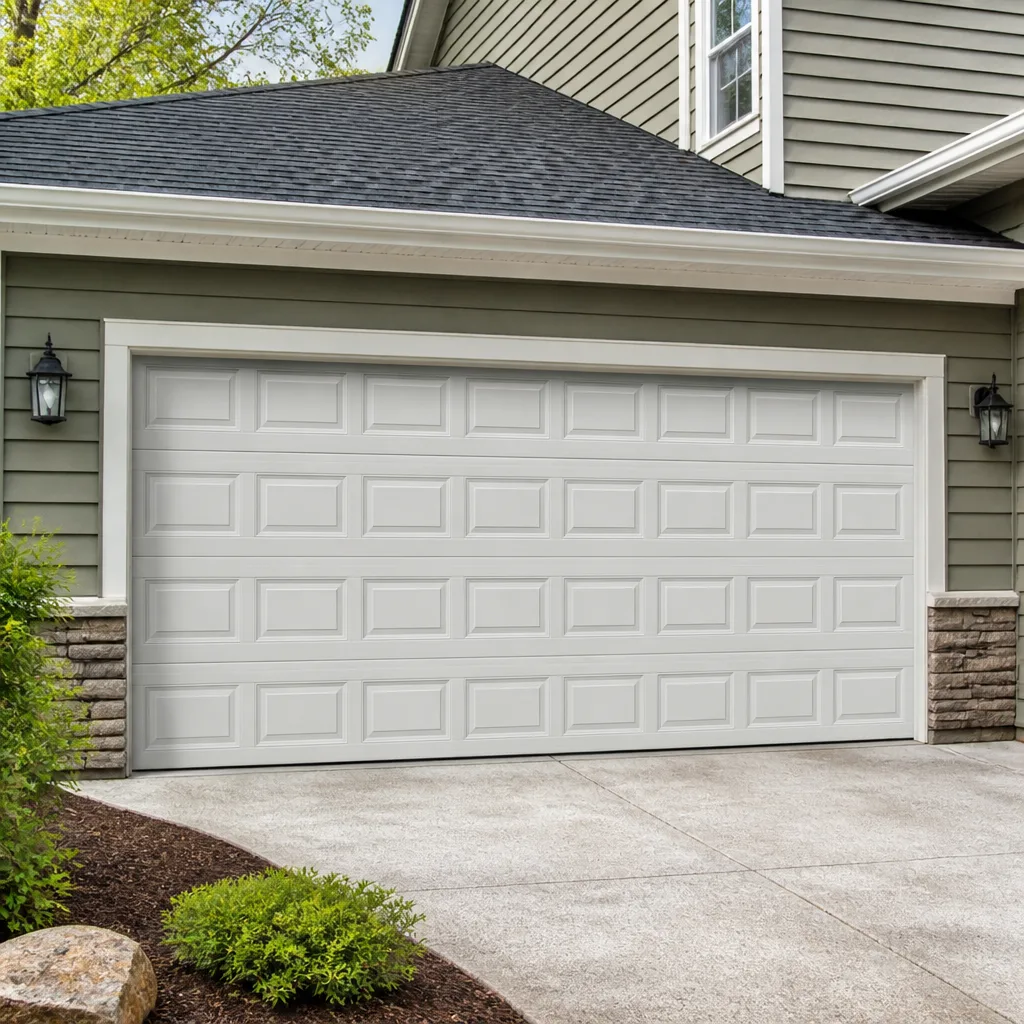 Raised-panel steel
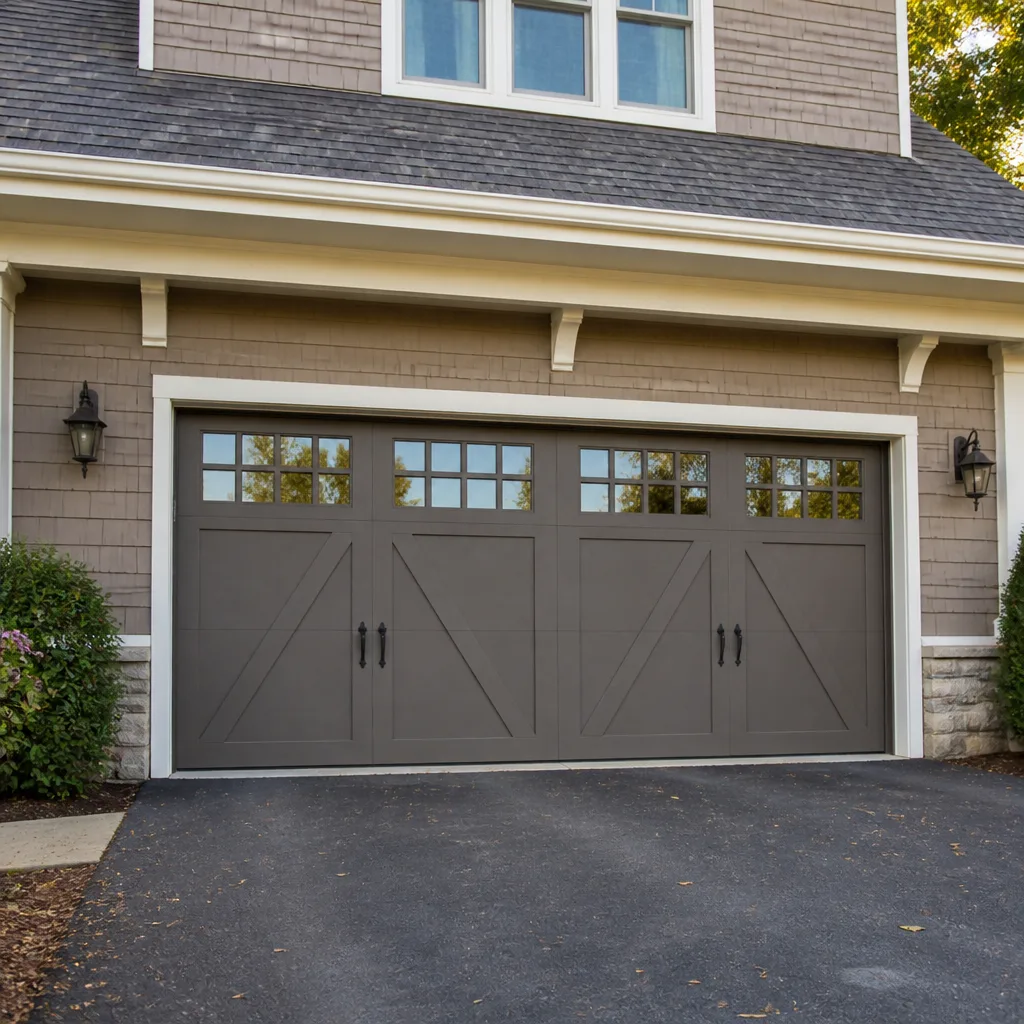 Carriage house
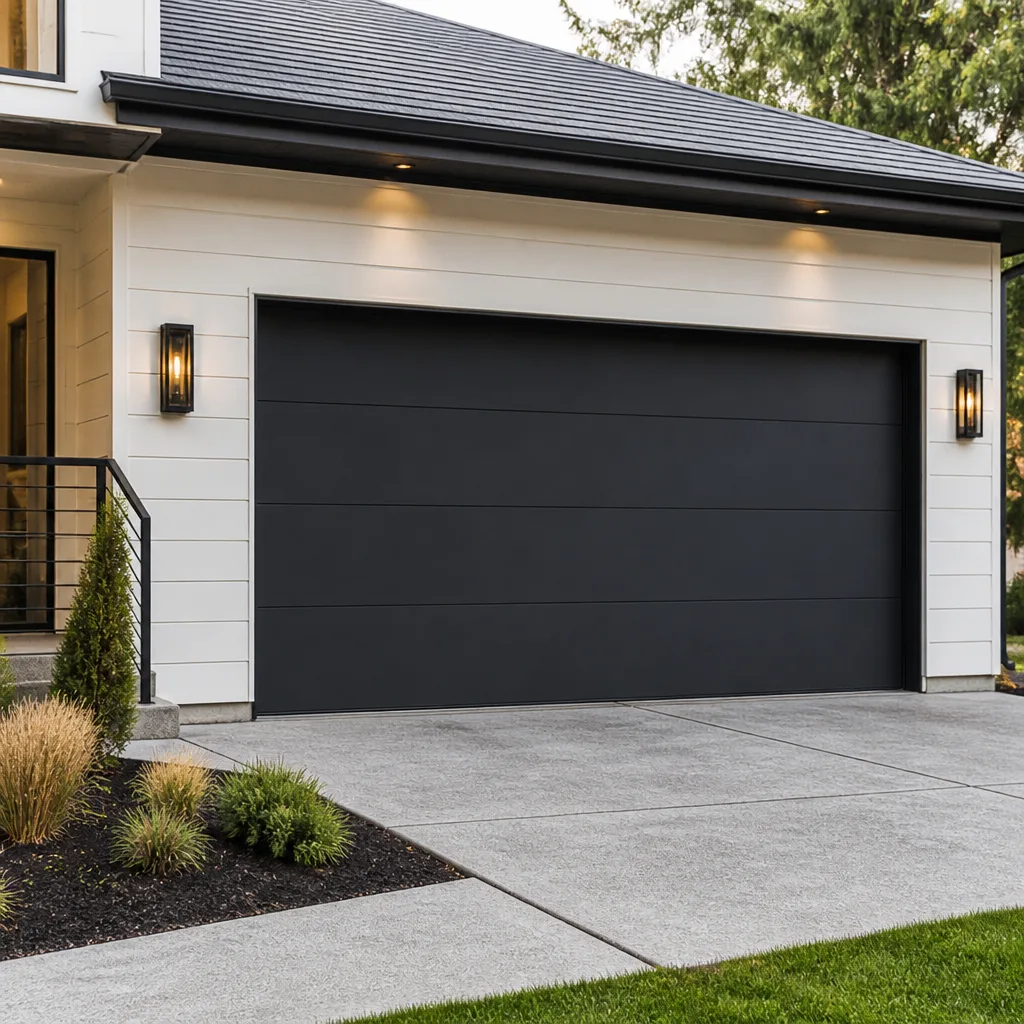 Modern flush
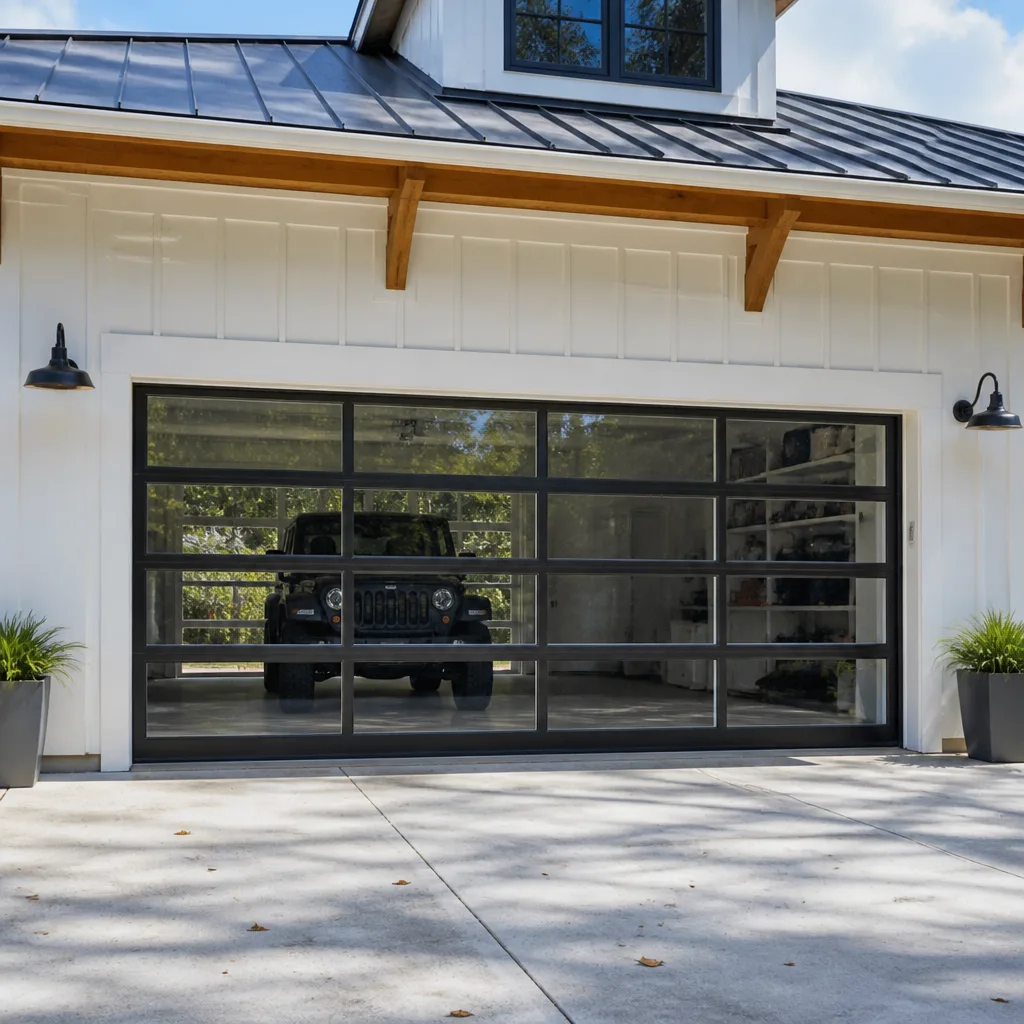 Full-view glass
 LiftMaster openers
 Chamberlain openers
Full 25-point door and opener safety check with every visit - springs, cables, rollers, tracks, and your LiftMaster or Chamberlain opener included
You get a price before we start. It does not change when the pro arrives.
Get your free estimateDIY vs Professional Garage Door: The Cape Coral Homeowner’s Decision Guide
Most homeowners assume the DIY-versus-professional question comes down to skill. It doesn’t. It comes down to stored energy. A torsion spring under normal residential tension holds enough force to break a wrist or worse if it releases uncontrolled, which is why even seasoned DIYers who will happily rewire a light fixture draw a hard line at spring work. Garage door repair splits cleanly into two piles: tasks a careful homeowner can genuinely handle and tasks where self-service is dangerous or non-compliant. This guide sorts those piles task by task, with Cape Coral code, climate, and cost context so you can decide with facts instead of fear.
Quick Answer
In Cape Coral, you can safely handle sensor alignment, remote programming, lubrication, and minor cosmetic fixes yourself. Spring replacement, cable work, and structural hardware repairs should go to a trained technician because the force involved can cause serious injury, and installation or replacement of a hurricane-rated door may require a permit that makes DIY work non-compliant. If your door won’t open, is off its track, or has a broken spring, call a professional.
Styles & brands we work with
- Raised-panel steel
- Carriage house
- Modern flush
- Full-view glass
- LiftMaster openers
- Chamberlain openers
Table of Contents
- The Task-by-Task Breakdown: What’s Safe and What Isn’t
- Florida Code and Permits: When DIY Becomes Non-Compliant
- The Real Cost of DIY Gone Wrong in Cape Coral
- Tools and Knowledge: An Honest Self-Assessment
- Borderline Tasks and How to Decide
- When Hiring a Pro Saves Money Even When DIY Would Work
- Why Brand Knowledge Changes the Repair
- Cape Coral’s Heat, Humidity, and Your Door
The Task-by-Task Breakdown: What’s Safe and What Isn’t
The cleanest way to decide is to sort every garage door job into three buckets: safe to DIY, borderline, and professional-only. Here’s how we break it down for homeowners across Cape Coral.
Safe to DIY (with care):
- Aligning or cleaning photo-eye safety sensors at the base of the tracks
- Reprogramming remotes and keypads, and replacing remote batteries
- Lubricating rollers, hinges, and tracks with a proper garage door lubricant
- Wiping down panels and touching up minor cosmetic scuffs
- Replacing a worn weather seal along the bottom of the door
- Clearing debris from the tracks and tightening exposed bracket bolts by hand
Professional-only (do not attempt):
- Torsion and extension spring replacement or adjustment
- Cable replacement or re-spooling
- Bottom bracket and drum work
- Straightening a door that has come off its track
- Replacing broken hinges under load or damaged panels
- Opener motor, logic board, or gear replacement
The dividing line is stored tension. Anything holding the door’s weight under tension, whether spring, cable, or bracket, can release violently. Everything else is generally a matter of patience. If you’re unsure which bucket a job belongs in, that uncertainty is your answer: call a professional. For a door that’s already failing, our garage door repair team can diagnose it on-site and tell you exactly what’s involved.
Florida Code and Permits: When DIY Becomes Non-Compliant
Here’s the part most Cape Coral homeowners don’t think about until it matters: installing or replacing a garage door in Florida can trigger a permit requirement, and pulling that permit requires a licensed contractor. That means a full door replacement is often not a legal DIY project, even if you’re mechanically capable.
Florida’s building code treats garage doors as part of the building envelope, and doors rated for wind resistance carry specific installation requirements tied to the product’s approval. When a door is replaced, the installation typically needs to match the rated assembly, and your local building department is the authority on what a permit requires for your specific situation.
- Check with the City of Cape Coral’s building department before buying a replacement door. Ask directly whether your project requires a permit and what documentation the installer must provide.
- Understand that a permitted installation needs a licensed installer. The contractor signs off on the work and provides the documentation that the permit closes out.
- Keep the paperwork. A permitted, documented installation is what your insurer will want to see if you ever file a storm-related claim.
- For repair-only work (springs, cables, opener), permits usually aren’t the issue. Safety is.
If you’re replacing a door, plan on a licensed installation. Our garage door installation service handles the permit and documentation side so you’re not stuck chasing it after the fact. For repairs where permit status is unclear, ask your city’s building department before you start.
The Real Cost of DIY Gone Wrong in Cape Coral
We’re not going to pretend every DIY attempt ends in disaster. Plenty of sensor cleanings and remote reprogrammings go perfectly. But there are failure patterns we see often enough to warn you about, and none of them involve scare tactics. They’re just what happens when a task moves past the safe line.
The most common is the spring job attempted without the right winding bars. When a torsion spring releases under full tension, it doesn’t just snap the spring; it can bend the center bracket, twist the shaft, and knock the door off balance. What would have been a straightforward spring replacement turns into a spring replacement plus bracket and shaft work plus a door re-level, with a much bigger repair bill than the original job.
The second pattern is the cable re-spooled by hand. A door that comes down unevenly because a cable wasn’t set correctly can crack a panel or bend a hinge under the strain within a few cycles. That’s a damaged door on top of the original problem.
The third is the opener forced to compensate for a door that isn’t balanced. Homeowners sometimes crank the opener’s force adjustment up to push a stiff door through its cycle. The door opens for a while, then the opener’s gear or logic board fails, and now you’re paying for an opener repair that wouldn’t have been needed if the door had been balanced in the first place.
In each of these cases the DIY attempt didn’t save money; it moved the cost into a larger repair. If you’re already looking at a door that isn’t behaving, our team at Garage Door Repair Cape Coral Pros can tell you whether the initial fix is simpler than you think.
Tools and Knowledge: An Honest Self-Assessment
Before you start any garage door task, run through this list honestly. If you can’t tick every box for the specific job, it belongs in the professional bucket.
- Do you have the right tools for the job? Spring work needs proper winding bars, not screwdrivers or pliers. Cable work needs a come-along and a way to safely secure the door. Opener diagnostics need a multimeter and the model-specific wiring diagram.
- Do you know your door’s brand and model? A Clopay door and a Wayne Dalton door can look identical from the street and have completely different spring assemblies and track configurations. Brand-specific knowledge matters.
- Have you watched the actual operation of the system? Watch the door cycle with the opener disconnected and the door in manual mode. That’s the only way to tell whether the issue is a spring, a cable, a roller, or an opener adjustment.
- Are you comfortable with the failure mode? For any task involving springs or cables, the failure mode is a sudden release of stored force. If you’re not certain you can stay out of the path, don’t start.
- Do you know when to stop? If anything in the middle of the job looks different from what you expected, stop and call someone.
Most borderline tasks fail on point two. Without the brand and model, even an experienced DIYer is guessing at the right part. That’s why when we work on a door, we come with an inventory of parts sourced to the specific system in front of us rather than a generic universal kit. We work on LiftMaster, Chamberlain, Genie, Clopay, Amarr, Wayne Dalton, Craftsman, and Raynor systems, and the right part makes the difference between a repair and a return visit.
Borderline Tasks and How to Decide
Some jobs live on the line. Here’s our practical call on each.
Opener remote and keypad issues: DIY. Reprogramming a remote or replacing a keypad battery is genuinely simple, and the manuals for most brands walk you through it step by step. If your opener is a LiftMaster or Chamberlain with MyQ, the app will also guide you.
Safety sensor misalignment: DIY. A door that closes partway and reverses is usually a sensor that’s been bumped or has a dirty lens. Cleaning the lens and realigning the sensor bracket with the receiving eye usually resolves it. If the sensor still won’t register after realignment, the sensor or its wiring needs a technician.
Noisy door: DIY for lubrication first. A proper garage door lubricant on the rollers and hinges quiets most doors. If the noise is a grinding or scraping from the opener itself, that’s a mechanical failure inside the unit and it needs a technician.
Door out of balance: Professional. If you can lift the door halfway and it won’t hold there on its own, the springs are out of balance or failing. Don’t adjust springs to compensate. That’s the job for someone who knows how the spring system works on your specific door.
Door that reverses immediately after being closed: Often DIY if it’s a sensor. Rarely DIY if the door goes down a few inches and reverses with a mechanical resistance feel, which usually means a roller or track issue.
Opener that runs but the door doesn’t move: Professional. This usually means a stripped gear, a broken drive belt, or a failed logic board, and the troubleshooting path depends on the model. Our garage door opener repair team deals with both legacy units and current connected systems.
When Hiring a Pro Saves Money Even When DIY Would Work
Some jobs you could do yourself, but calling a pro still leaves you financially ahead. Here’s where that math works.
Warranty preservation. If your garage door or opener is under warranty, a self-installed part or an unsuccessful repair attempt can void the coverage on the affected component. A warranty repair covered by the manufacturer is worth real money, and a technician’s workmanship is often required to keep it valid. This matters for anything under a new-home warranty, and plenty of Cape Coral homes built during the last several construction waves have active coverage on their doors and openers.
Insurance documentation after storm damage. If your door has been damaged by wind or impact and you intend to file a claim, your insurer will want documentation of the damage and the repair. A licensed contractor can provide that; a DIY repair leaves you with no paper trail. Even when the repair itself is within your skill set, the claim side usually isn’t.
Time and repeat visits. DIY sensor and remote fixes are worth your afternoon. A two-hour diagnostic that ends in a return trip to the parts store because the roller size was wrong has already cost you the repair. A technician who shows up with the right parts doesn’t lose that time.
Resale. If you’re selling in the next couple of years, documented professional repairs on the door and opener are an easier conversation at inspection than a folder of receipts from your own work. This is a soft consideration, but real.
If any of these apply to your situation, call us at (877) 492-3592. Estimates are free, and we’ll tell you plainly if your job is one you can safely handle yourself.
Why Brand Knowledge Changes the Repair
Most garage door problems look alike from the outside. A door won’t open. A door makes noise. A door reverses. But the diagnostic path narrows quickly once you know the brand and model, and that’s where the decision between DIY and professional shifts.
A Clopay door has its own panel and spring configuration; a Wayne Dalton door has a different one; an Amarr door differs again. An opener behaves differently depending on whether it’s a lift system with a chain-drive layout or a belt-drive unit with a wall-mount configuration. A Craftsman opener from a decade ago runs a completely different internal diagnostic pattern than a current Chamberlain with MyQ. Without brand-specific familiarity, an experienced DIYer is still guessing at what “normal” looks like for a given unit.
We work across eight major brands specifically because the door in your Cape Coral home is probably one of them, and the right fix usually depends on knowing that brand’s quirks. Spring repair in particular isn’t a generic job; the spring type, length, wire gauge, and winding direction are matched to your door’s weight and manufacturer’s specification. Get any of those wrong and the door won’t balance properly regardless of how carefully it was installed.
Cape Coral’s Heat, Humidity, and Your Door
Cape Coral’s heat and humidity put steady wear on a garage door that northern homeowners don’t have to think about. The garage is often the hottest space in the house, and even when it’s ventilated, humidity inside and out keeps the metal components working harder than they would in dry climates.
What that means in practice:
- Metal components inside the opener and along the tracks can corrode faster, which is one more reason regular lubrication is worth your time.
- Rubber weather seals along the bottom of the door degrade faster in sustained heat, so they benefit from an annual look.
- Springs can lose tension faster under the load of cycling a door against a hot, sticky track, though the primary failure mode is still metal fatigue.
- Panel paint takes a beating from the sun and humidity combined, which is why a cosmetic touch-up every year or two keeps a door from needing replacement sooner than it should.
None of this changes the DIY-versus-professional split. But it does mean a door that worked fine in a mild climate can start showing small problems after several years in Cape Coral, and those should be looked at before they become structural failures. If your door is older and starting to show its age, a repair is often a better call than a replacement. If it’s genuinely at end of life, a garage door installation replaces the whole system and gives you a clean baseline.
Common Mistakes to Avoid
- Using the opener’s force adjustment to compensate for a door that doesn’t balance. The door opens for a while, then the opener’s internal components fail. Balance the door; don’t crank the opener.
- Trying to remove a torsion spring without proper winding bars. Screwdrivers, pliers, and vice grips are not substitutes. A slipped tool on a loaded spring can cause serious injury. Leave spring work to a trained technician.
- Replacing a hurricane-rated door without checking permit requirements. Cape Coral’s building department is the authority on what requires a permit; ask before you buy the door.
- Assuming a brand-name part will “probably fit.” Springs, rollers, and hinges are matched to the door’s weight and system. The wrong part fits physically and fails in operation.
- Ignoring a door that reverses on its own. A door that reverses partway through a cycle usually has a failing sensor or a structural issue. Delay rarely makes the repair smaller.
- Doing DIY repairs on a door still under warranty without checking first. One unsuccessful self-repair can void coverage on an expensive opener or door.
- Forgetting the paperwork after storm damage. If you plan to file a claim, document the damage and use a licensed contractor so the repair is provable.
See the difference
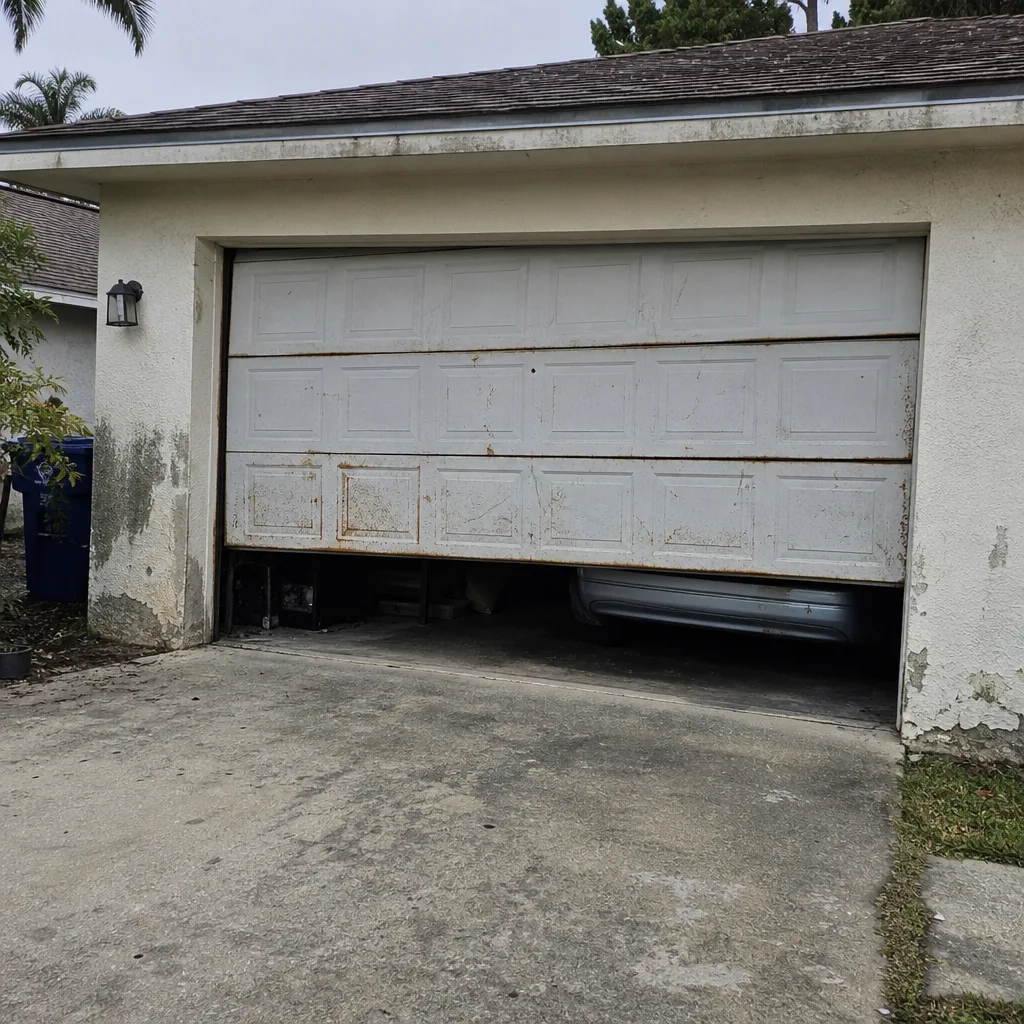 Before
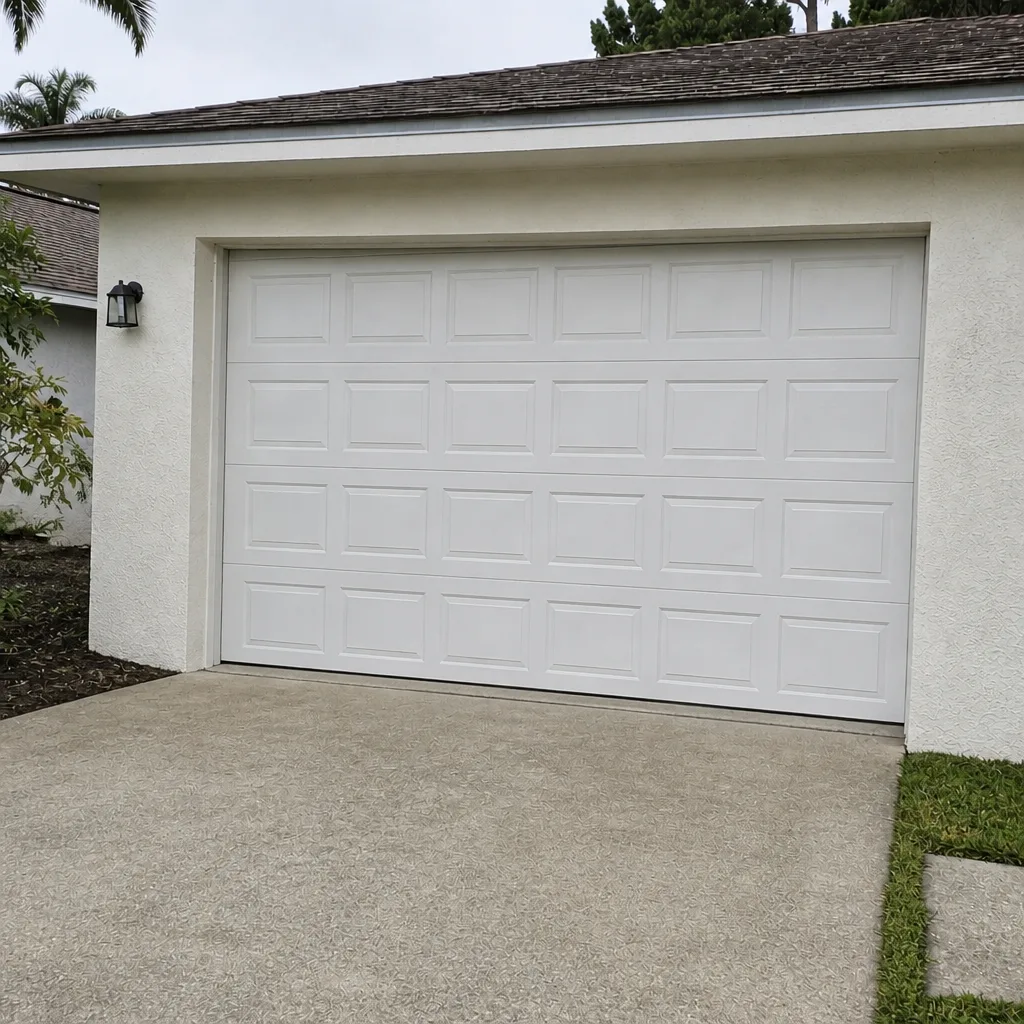 After
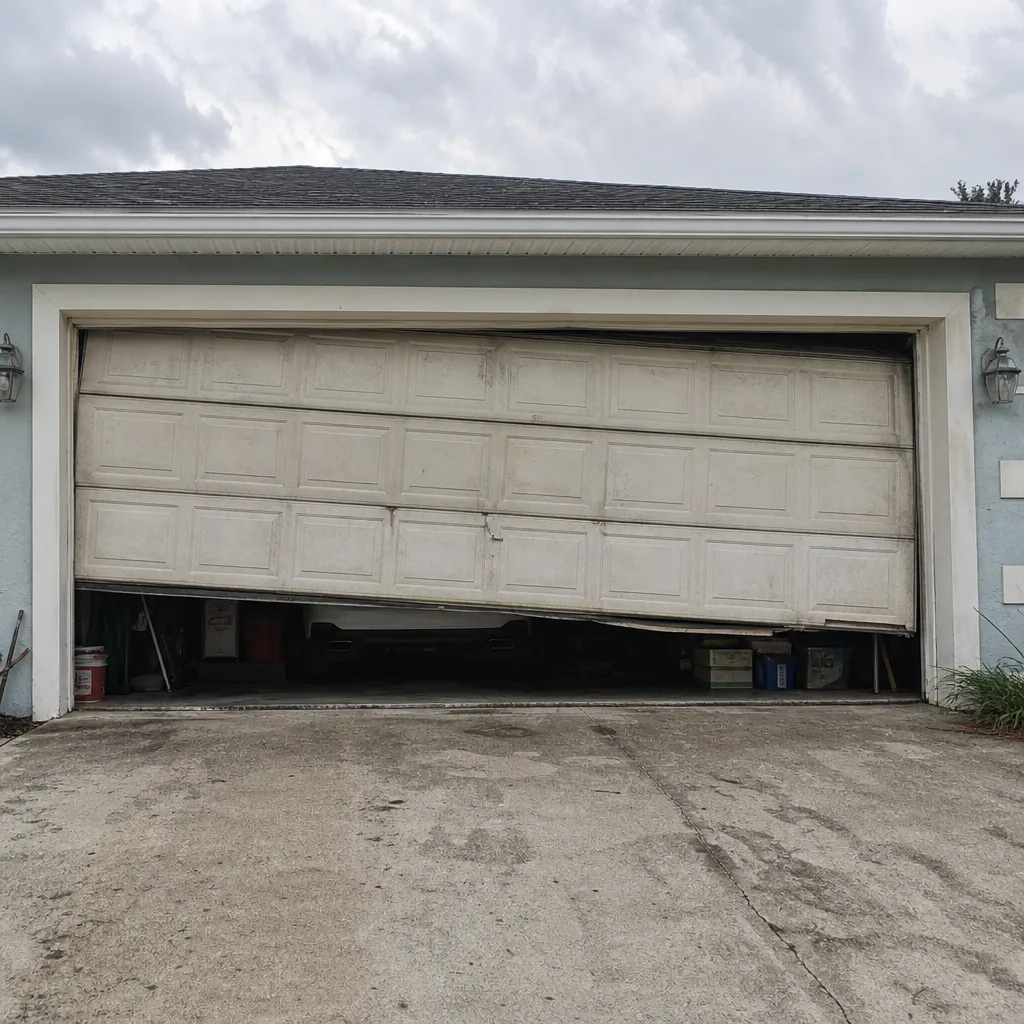 Before
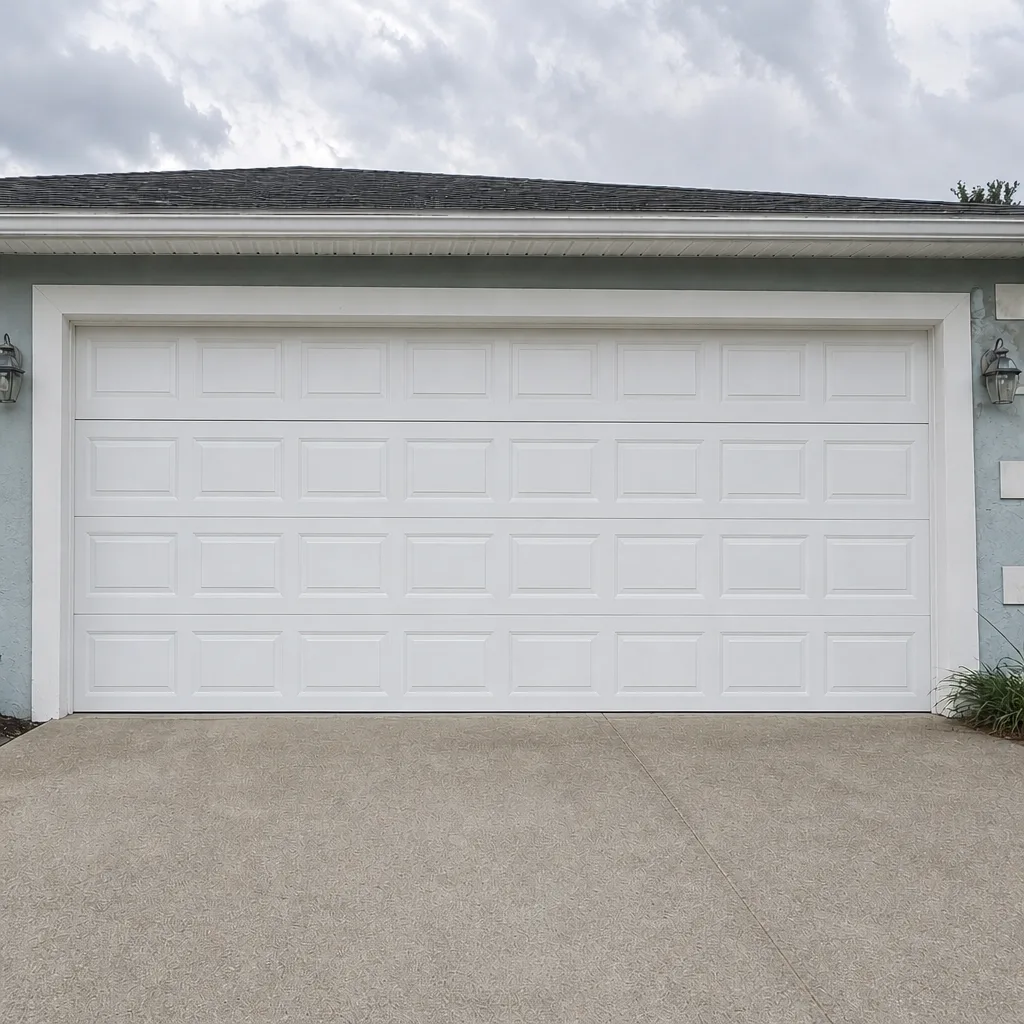 After
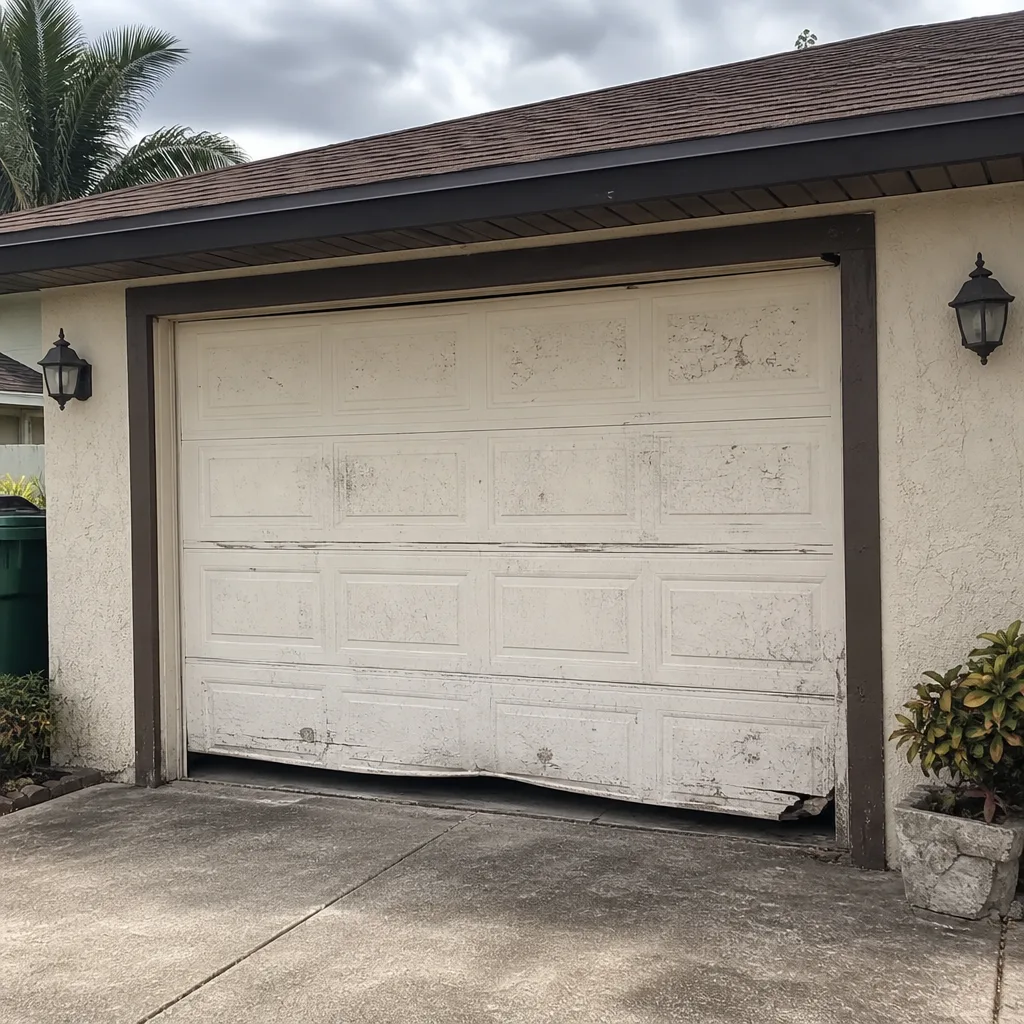 Before
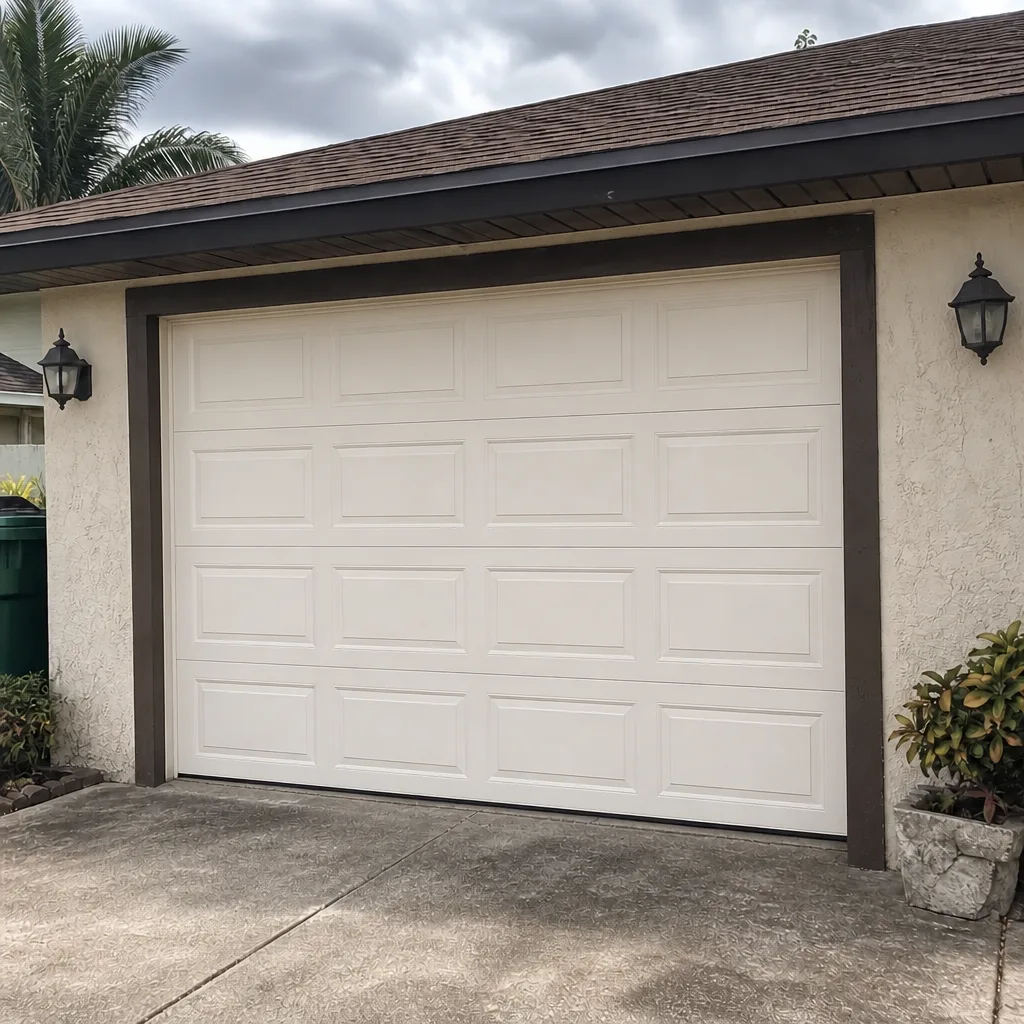 After
When to Call a Professional
Call a professional the moment a job crosses into spring, cable, or structural hardware territory. Call us immediately if the door has come off its track, if you hear a loud snap from the overhead mechanism, or if the door no longer moves in a controlled way. Springs, even when they’ve already broken, can hold residual energy, so a “broken” spring is not a safe one. Our technicians have up to 12 years of experience, and we work on the brand systems most common in Cape Coral homes.
Garage Door Repair Cape Coral Pros offers free estimates in Cape Coral; call (877) 492-3592. We’ll tell you plainly whether your job is one you can safely handle yourself, and if it isn’t, we’ll schedule the repair so the price is quoted and agreed before any work starts. One call covers the whole system: opener, springs, panels, and the parts the repair will need.
Frequently Asked Questions
No, really no. Garage door springs store enough force to seriously injure you if they release uncontrolled, and installing a new spring safely requires specific tools and knowledge of your door’s balance and spring specification. This is a professional repair, not a DIY project, no matter how confident you feel about it.
Replacing a garage door in Cape Coral often requires a permit, and that usually means the installation needs to be performed by a licensed contractor. Ask the City of Cape Coral’s building department directly before you buy a door or schedule an install, because the requirements can vary by door type and situation. A licensed installer handles the permit and provides the documentation.
Spring repair in Cape Coral typically runs in the $180 to $340 range per spring, and since most doors use a matched pair that should be replaced together, a pair usually costs about twice a single spring. The written estimate sets the final price, and we quote and agree before any work starts. Call (877) 492-3592 for an exact quote. Estimates are free.
Simple opener fixes are safe to DIY, like reprogramming remotes, replacing batteries, and clearing sensor misalignments. Anything involving the opener’s internal mechanics, like a stripped gear, a failed logic board, or a drive motor, needs a technician because the internal repair depends on the specific model. If the door won’t move reliably, call for a diagnostic before you dig into the unit.
Insurance coverage after storm damage usually requires documentation of both the damage and the repair, and a licensed contractor can provide that documentation. A DIY repair often leaves you without the paper trail your insurer needs. If you plan to file a claim, use a licensed professional for the repair even if the work itself would be within your abilities.
Stop operating the door. A door that’s off its track is under unusual tension and can fall or shift unpredictably if the opener is used. Keep everyone clear and call for professional repair. A tech can safely bring the door down and get it back on the tracks. Call (877) 492-3592 for a same-day response during normal service hours.
The Bottom Line
DIY versus professional on a garage door isn’t about whether you’re handy. It’s about stored energy, permit rules, and which work a trained technician actually needs to do. Safety sensors, remotes, lubrication, and cosmetic fixes are yours to handle. Springs, cables, structural hardware, and full-door installations are not, because the force involved and the code requirements around hurricane-rated doors put them past the safe line. Add in the reality that a DIY mistake usually costs more than the repair would have, and the sensible split becomes obvious. If you’re not sure which bucket your job falls into, call us at (877) 492-3592 and we’ll tell you honestly.
Written by the team at Garage Door Repair Cape Coral Pros.