Last updated November 21, 2026
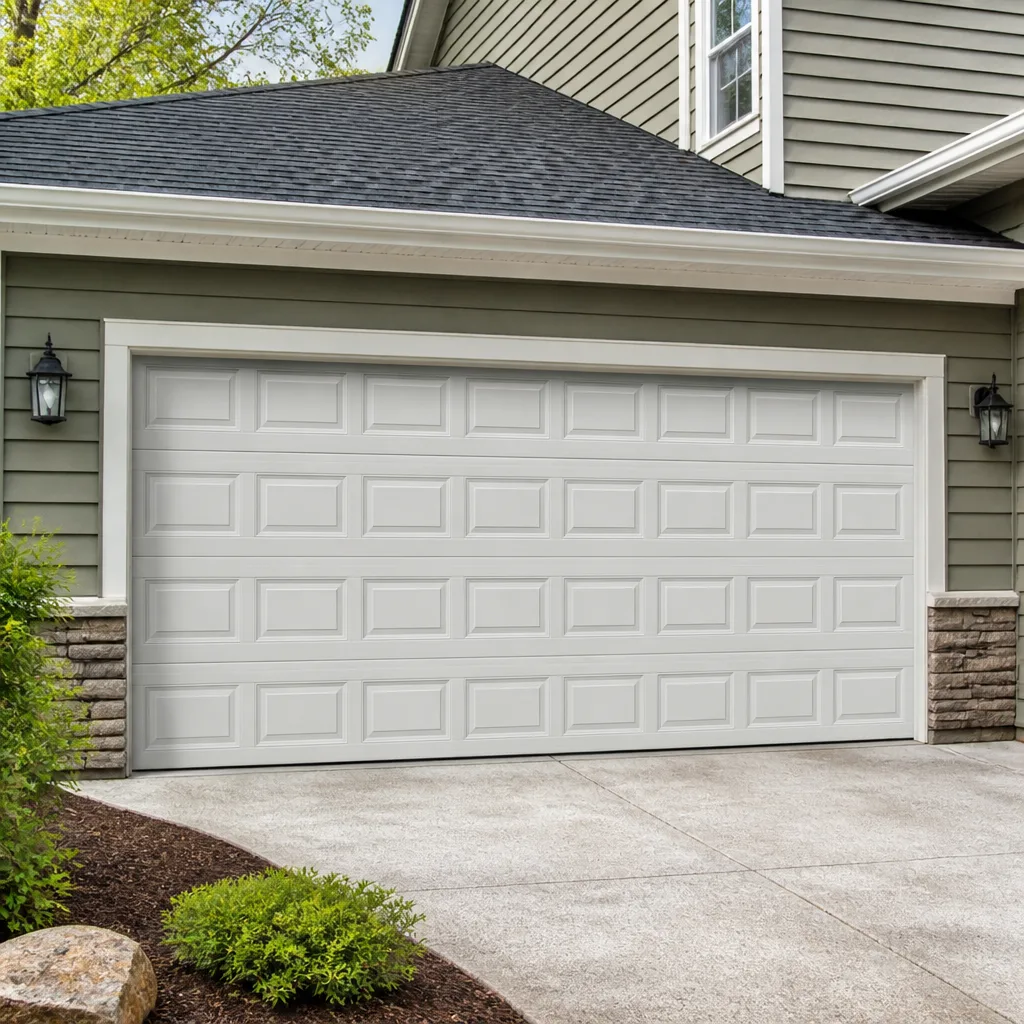 Raised-panel steel
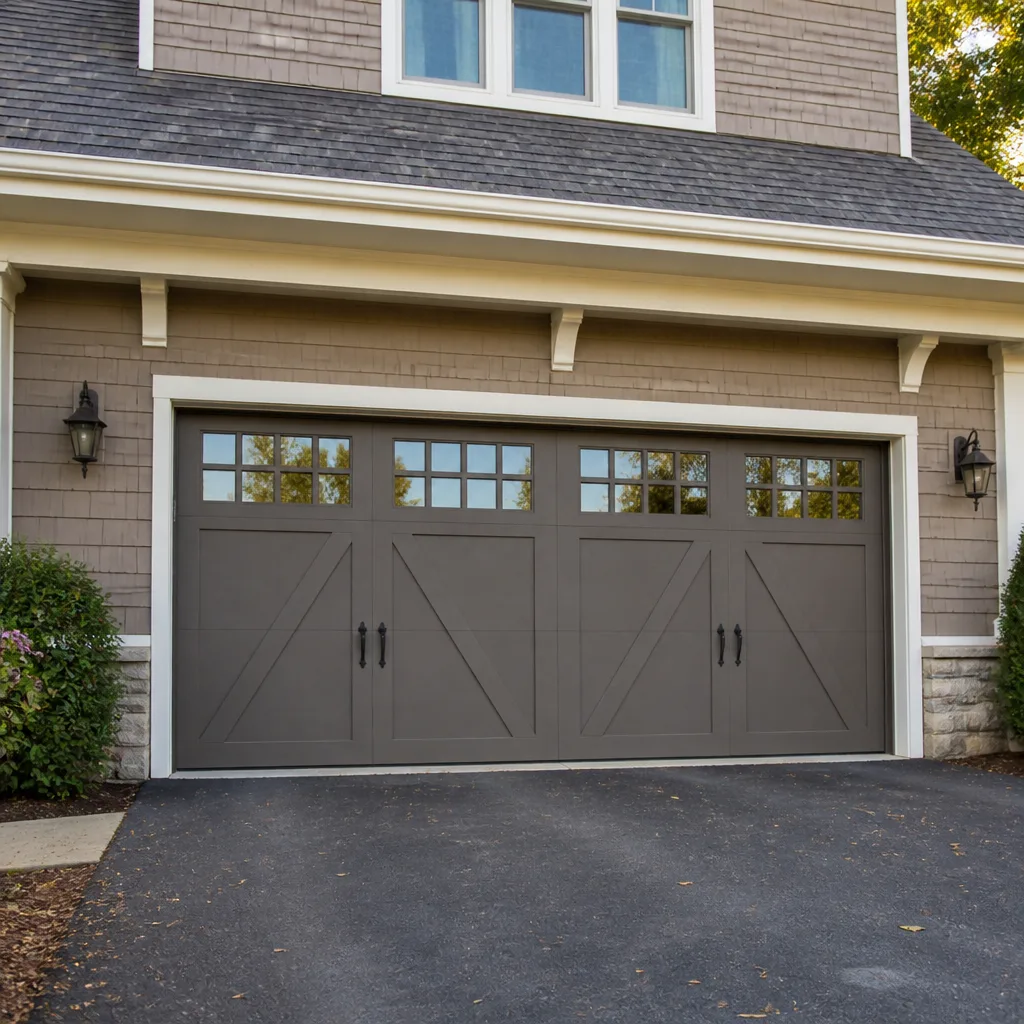 Carriage house
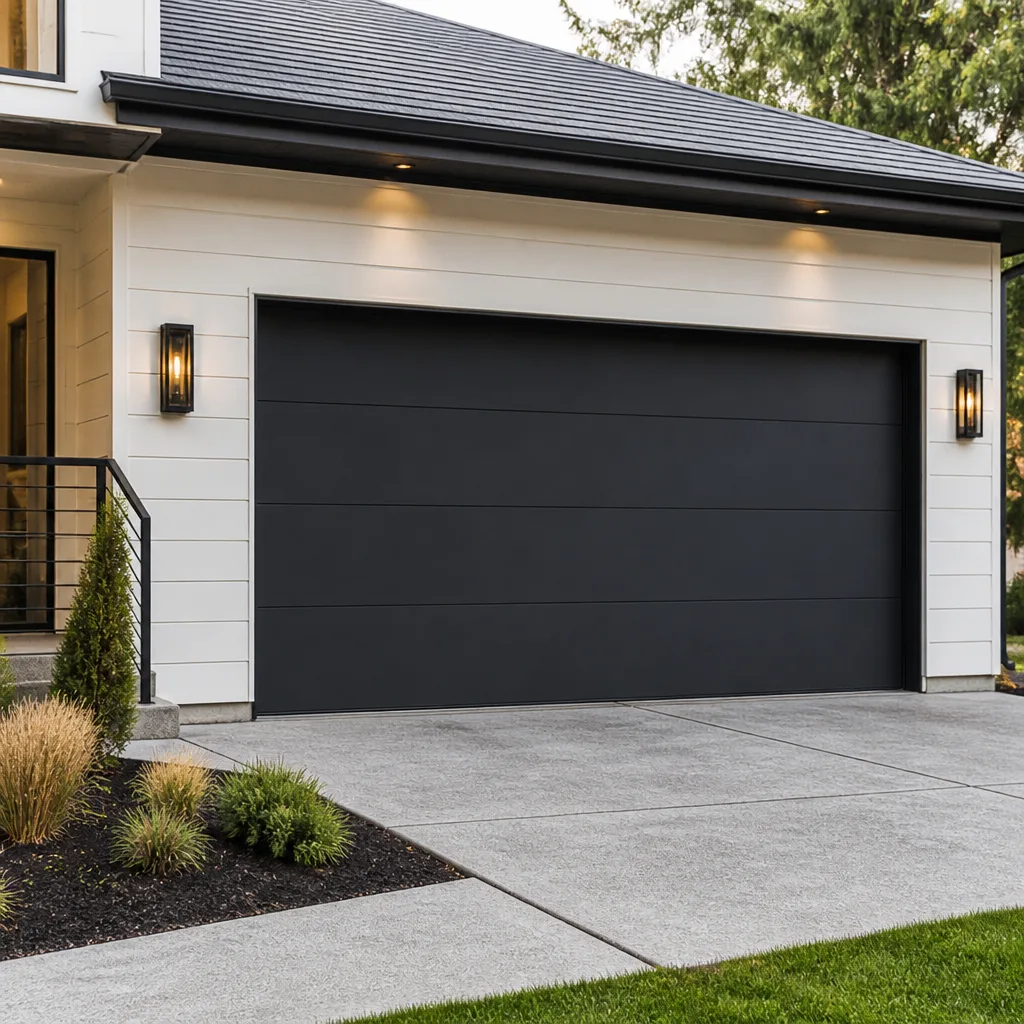 Modern flush
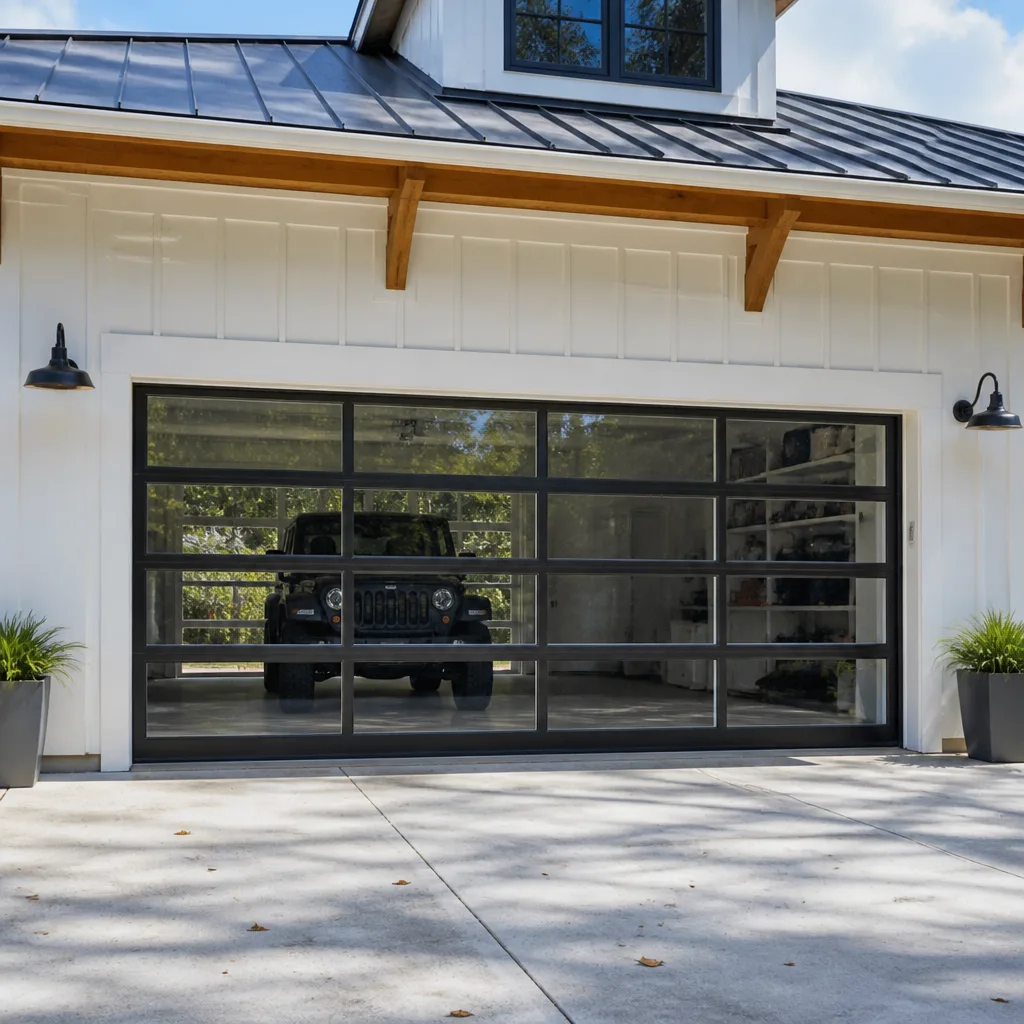 Full-view glass
 LiftMaster openers
 Chamberlain openers
Full 25-point door and opener safety check with every visit - springs, cables, rollers, tracks, and your LiftMaster or Chamberlain opener included
You get a price before we start. It does not change when the pro arrives.
Get your free estimateGarage Door Emergency Preparedness Guide for Cape Coral Homes
Most Cape Coral homeowners think about their garage door in the middle of a storm, which is the worst possible time. The door is your largest moving object, it’s often the only way to move a vehicle out of the house, and the procedure that frees a door when the power dies takes about ten seconds and almost nobody practices it until they need it. During Hurricane Ian, plenty of Cape Coral residents learned this the hard way with cars stuck inside. This guide covers the manual release, a pre-storm checklist, post-storm inspection steps, and what your insurer will want. Read it now, not later.
Quick Answer
To prepare your garage door for a Cape Coral storm, learn the manual release procedure before you need it, clear the door’s travel path of stored items, test the weather seal and hardware while skies are calm, photograph the door for insurance records, and always inspect for structural damage after a wind event before you operate anything. A damaged door should be handled by a trained technician, not a homeowner with a pry bar. Preparation is what separates a ten-minute inconvenience from a blocked exit.
Styles & brands we work with
- Raised-panel steel
- Carriage house
- Modern flush
- Full-view glass
- LiftMaster openers
- Chamberlain openers
Table of Contents
- How the Manual Release Works (And What Most Instructions Skip)
- Pre-Storm Garage Door Preparation
- When Disconnecting the Opener Is the Right Call
- Post-Storm Damage Assessment Sequence
- Insurance Documentation for Storm-Damaged Doors in Lee County
- Temporary Security When Your Door Won’t Close
- Brand-Specific Emergency Behavior: Chamberlain, Genie, Clopay, Amarr
- Why Cape Coral Doors Fail Differently Than Doors Elsewhere
How the Manual Release Works (And What Most Instructions Skip)
The manual release cord on your opener is the single most important piece of safety equipment in your garage, and almost everyone learns where it is under duress. In an emergency, the procedure is short:
- Locate the release cord hanging from the opener trolley. It’s usually a red handle attached to a short rope near the door’s center.
- Stand clear of the door’s path. The door should be fully closed before you pull, if possible, because a spring or hardware failure can send it down fast.
- Pull the cord straight down with a firm, steady motion. It disconnects the trolley from the door.
- Lift the door by hand. A properly balanced door rises with one hand. If it feels unusually heavy, stop; that’s a spring problem, not a technique problem.
Now the parts most instructions skip. If the cord is jammed or won’t release, check whether the trolley is under tension from the carriage; try pulling at a slight angle toward the door rather than straight down. If the cord is snapped or missing, most openers have a manual release lever you can reach with a stepladder. Don’t climb up during a storm if the door is behaving unpredictably; wait for the wind to pass. After power returns, re-engage the trolley by pulling it back toward the opener until it clicks, then run the opener through one full cycle before trusting it with a vehicle. In Cape Coral, where power outages are a seasonal reality, this re-engagement step is the one people forget, and a door that runs halfway and stops is usually the result.
Pre-Storm Garage Door Preparation
Pre-storm prep for a Cape Coral home is about verifying the door you already have and clearing the space it needs to work. Do these checks while skies are calm and you have time to fix problems:
- Test the manual release. Pull it once, lift the door, re-engage it. If anything feels stiff, sticky or wrong, get it looked at before the storm, not after.
- Clear the travel path. Boxes, bikes and golf bags stacked near the door track become projectiles in high wind once the door is open or compromised.
- Inspect the weather seal. Every gap under and around the door is a water entry point. A worn bottom seal lets the storm in even if the door itself holds.
- Loose hinges, rattling bolts and wobbling brackets get much worse under wind load. If you can wiggle it by hand, it will wiggle more in a storm.
- Test the auto-reverse. Put a piece of wood under the door and confirm it reverses on contact. This safety feature matters every day, not just in storms.
- Photograph everything. One wide shot of the closed door, one of the opener label, and one of any existing damage.
Cape Coral’s housing stock includes a lot of homes built in the last two decades alongside re-built and retrofitted structures, and the prep you do depends on the door’s age, not the calendar. If your door was installed during a previous decade, assume nothing has been serviced since. The best pre-storm check is a full system inspection by a technician who knows your door’s brand.
When Disconnecting the Opener Is the Right Call
There are situations where intentionally disconnecting the opener is the safer choice, and there are situations where it makes things worse. Disconnect when you’ll be away during a storm and want the door in a mechanically locked position with the opener out of the loop; a powered opener that tries to operate a door under extreme wind load can jam or damage itself. Disconnect when the opener is showing odd behavior, like randomly reversing, because that’s a symptom worth isolating rather than relying on during an emergency. Do not disconnect if you’ll need to open the door repeatedly during the storm, because you’ll have to re-engage it manually each time, and if the door is heavy, that’s dangerous in a hurry.
If you do disconnect for a storm, lock the door mechanically. Most doors have slide bolts or interior locking hardware, and a closed door with the traveler locked is more secure than one relying solely on the opener’s holding torque. After the storm, reconnect and test the opener before returning to normal use. A door that feels weak or sluggish after re-engagement is telling you something; we’ve seen openers fail weeks after a storm because a bent carriage or a stretched spring was ignored when the power came back on.
Post-Storm Damage Assessment Sequence
After a wind event, inspect your garage door in this order before you touch the opener or lift the door by hand:
- Look at the panels from the outside. Dented panels are cosmetic; misaligned panels are structural. If a panel has popped out of its hinge, stop.
- Check the tracks. Run your hand along each vertical and horizontal track without weight on it. Bent tracks are a structural issue; attempting to operate a door on bent tracks risks a jam or a drop.
- Check the springs and cables. Visually inspect the torsion bar and springs above the door. A broken spring shows an obvious gap. Loose or slack cables mean trouble. Both are safety-critical; do not touch them, and don’t run the opener.
- Check the brackets and hinges. Look for pulled-out lag bolts and cracked hinges. If the door is sagging at one corner, that’s structural.
- Check the weather seal. A torn bottom seal is a minor fix; a seal that’s been pulled loose along one side suggests the door moved during the storm.
Cosmetic damage includes scratches, faded paint, small dents in the panel face, and a scraped bottom rail. Structural damage includes bent tracks, broken springs or cables, popped panels, and a door that no longer sits square in its frame. When in doubt, assume structural. If your door shows structural damage, do not operate it; a technician should assess it first. If it’s genuinely cosmetic, a garage door repair visit will tell you for certain and quote the fix before any work starts.
Insurance Documentation for Storm-Damaged Doors in Lee County
A storm claim moves faster when you hand your insurer a complete file. Build it before you call the adjuster, because adjusters are busy after a Lee County event and a disorganized claim sits in a pile. Photograph the door from four angles (closed, exterior, interior, and a close-up of the damaged area), photograph the opener label including the model number, and photograph the surrounding wall or floor showing water intrusion if any exists. Write a short description of what happened and when, including the date and a description of the weather conditions. Keep your pre-storm photos; they’re your proof that the damage is new.
What your insurer will typically ask for: the door’s brand and model (Clopay and Amarr doors both stamp this information on the interior bottom panel or a label near the tracks), the date the damage occurred, whether the door was closed or open when the damage happened, and any prior repair records. For storm-damaged doors in Cape Coral, your policy may also ask for a contractor estimate, so having a written quote ready speeds up the process. We can work with your insurer and provide a written scope of the repair; if you’re facing a full replacement, a garage door installation estimate from us will be itemized. No claim is accepted on your behalf by us; we simply give you the documentation you need.
Temporary Security When Your Door Won’t Close
When your garage door won’t close after storm damage, temporary security matters before anything else. Your three priorities are stopping access, stopping further damage, and getting a technician out. In that order:
- Close the interior door into the house. Lock it. That’s your first line for keeping the rest of the house secure.
- Block the garage opening from the outside. A sheet of plywood cut to fit the opening, braced against the frame with 2x4s, is the standard approach. If the door is partially down, do not force it or push it; a partial door can drop.
- Disconnect the opener if the door is jammed, then unplug it so it can’t try to cycle electronically.
- Secure any valuables inside and consider temporarily parking your vehicles outside the garage if the opening isn’t sealable.
- Document the temporary measures with photos for your insurer.
For a partial or stuck door, do not use rope, straps or a second door to hold it in place; a heavy panel that comes down under its own weight has hurt people. A technician can often get a damaged door into a closed and locked position without a full replacement, which buys you time while you wait for a new door. This is where garage door opener repair often gets bundled with the storm repair, because the force of a wind-loaded door can damage the opener’s internal gearing even if the door comes out fine.
Brand-Specific Emergency Behavior: Chamberlain, Genie, Clopay, Amarr
Garage doors are systems, and the system’s emergency behavior depends on the brand. We work on eight major brands, and knowing how each behaves changes the diagnosis. A Chamberlain opener from the LiftMaster family often shows a manual release trolley that’s tighter than expected when the door has been sitting under load for months; the fix is a technique adjustment, not force. A Genie opener, particularly the Aladdin-generation smart units, may refuse to re-engage after a manual release if the carriage hasn’t fully clicked back into the housing. A Clopay steel door’s panel-and-hinge design behaves differently from an Amarr door’s, especially after a wind event has pushed the door out of square; Clopay’s panel alignment tolerances are tighter, and a popped panel on a Clopay usually needs a specific hinge-and-panel re-seat rather than a generic bend-back.
If your opener is a Craftsman legacy unit, the manual release cord can be shorter than on newer models, and the trolley may need a full reverse-to-engage cycle before it works. A Wayne Dalton door with its proprietary hardware sometimes uses a different torque system than the torsion springs on other brands. A Raynor commercial-grade door behaves differently from residential. The point of brand-specific diagnosis is that a technician who’s seen your brand knows which symptom means “adjust” and which means “stop.” We document the brand and model on every job so the next call starts from what the door actually is, not what it looks like.
Why Cape Coral Doors Fail Differently Than Doors Elsewhere
Cape Coral’s construction pattern and exposure mean the garage door absorbs more stress than it would in a milder climate. Florida’s high-wind requirements mean doors in Cape Coral are often built to withstand sustained winds that would crumple a standard door, but a door rated for wind load is still vulnerable to impact damage from debris, water intrusion through the seal, and the mechanical stress of the door being pushed against its stops during a storm. The salt-air point that guides often make doesn’t apply here, but humidity and heavy rain absolutely do; a door that sits closed through a rainy season develops moisture-driven corrosion on its hinges and springs faster than in a dry climate. That’s a maintenance issue, not a defect.
Cape Coral homes with a garage that faces the street have another problem: the door is the house’s face during a storm, so it takes the first hit. If your neighborhood has seen repeated storms in recent years, the door’s hardware has already been tested. If it hasn’t, budget for a system inspection now. Our technicians have up to 12 years of experience with these exact conditions, and they know the difference between a door that’s fine and a door that’s been weakened and just hasn’t failed yet. Call (877) 492-3592 for a free estimate on a full system check.
Common Mistakes to Avoid
- Never pull the manual release with the door open unless someone is holding it. A door that’s up when you release it can come down fast. Pull with the door closed, then lift by hand.
- Don’t force a stuck door. If the door won’t move, a bent track or a broken spring is the cause; forcing it makes the damage worse and can hurt you.
- Don’t try to fix a spring yourself. Springs are under extreme tension and are one of the most hazardous homeowner repairs there is. Leave it to a trained technician.
- Don’t operate the opener on a door with obvious damage. A single cycle on bent tracks can destroy the opener’s gear and turn a repair into a replacement.
- Don’t skip the pre-storm photo. Without pre-storm photos, your insurer has no baseline. Take them now.
- Don’t store heavy items on the tracks or near the door. In high wind, anything that can move will.
- Don’t ignore a door that won’t re-engage after the storm. In Cape Coral, a re-engagement failure usually means the carriage or trolley took impact damage; it’s not just a nuisance.
See the difference
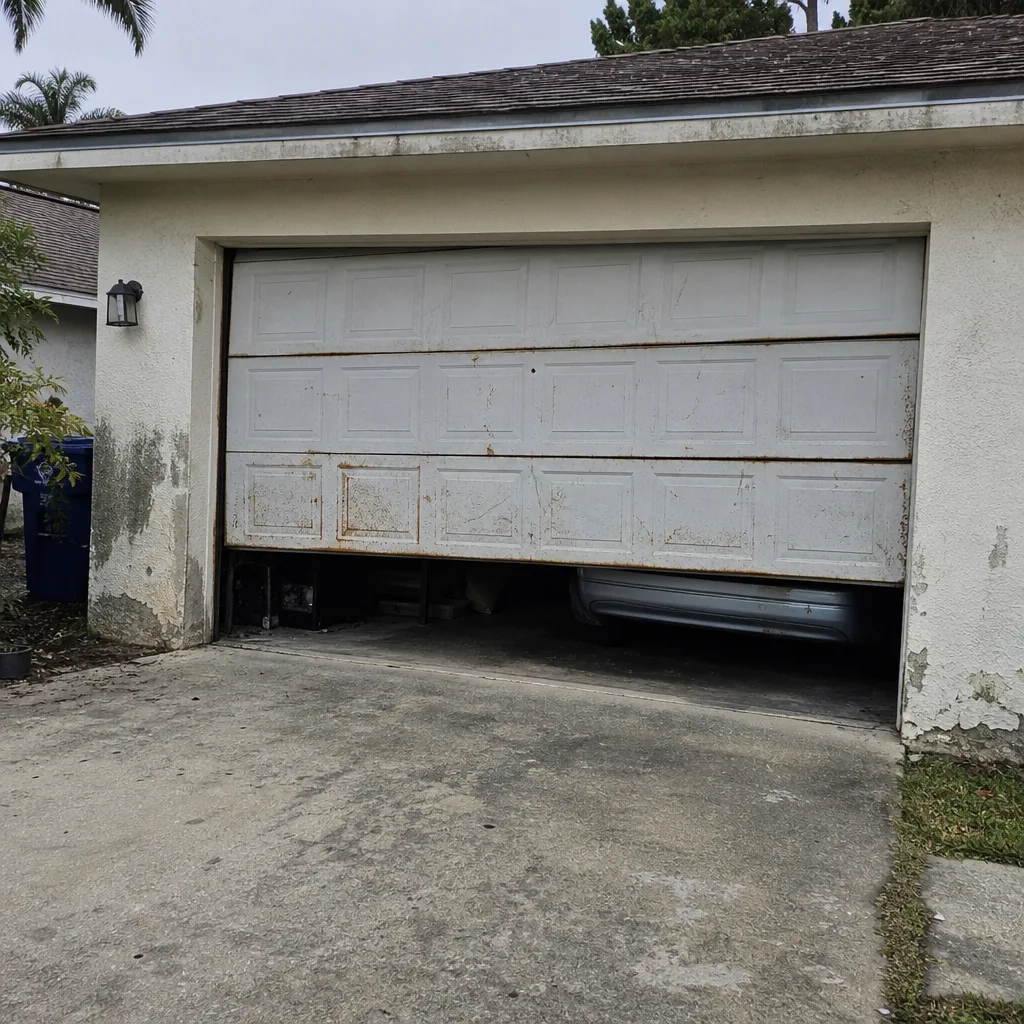 Before
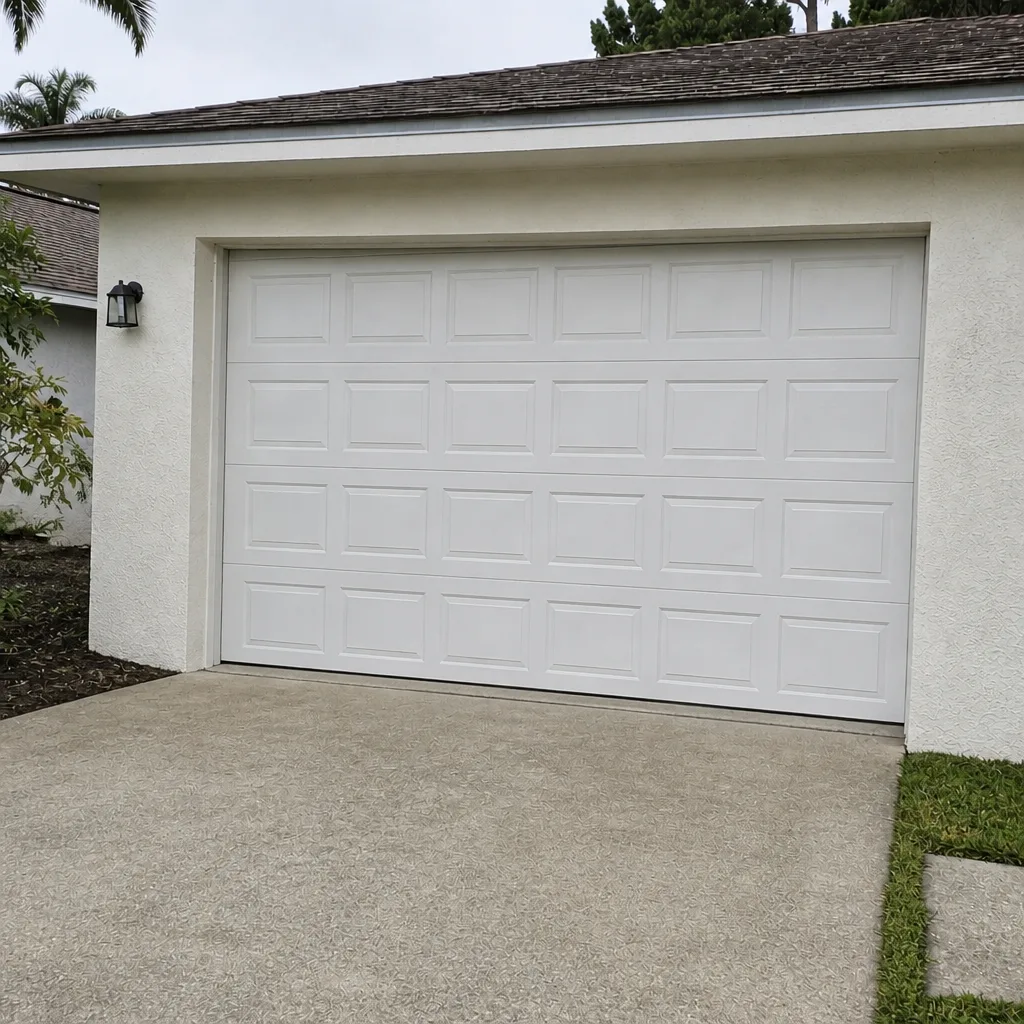 After
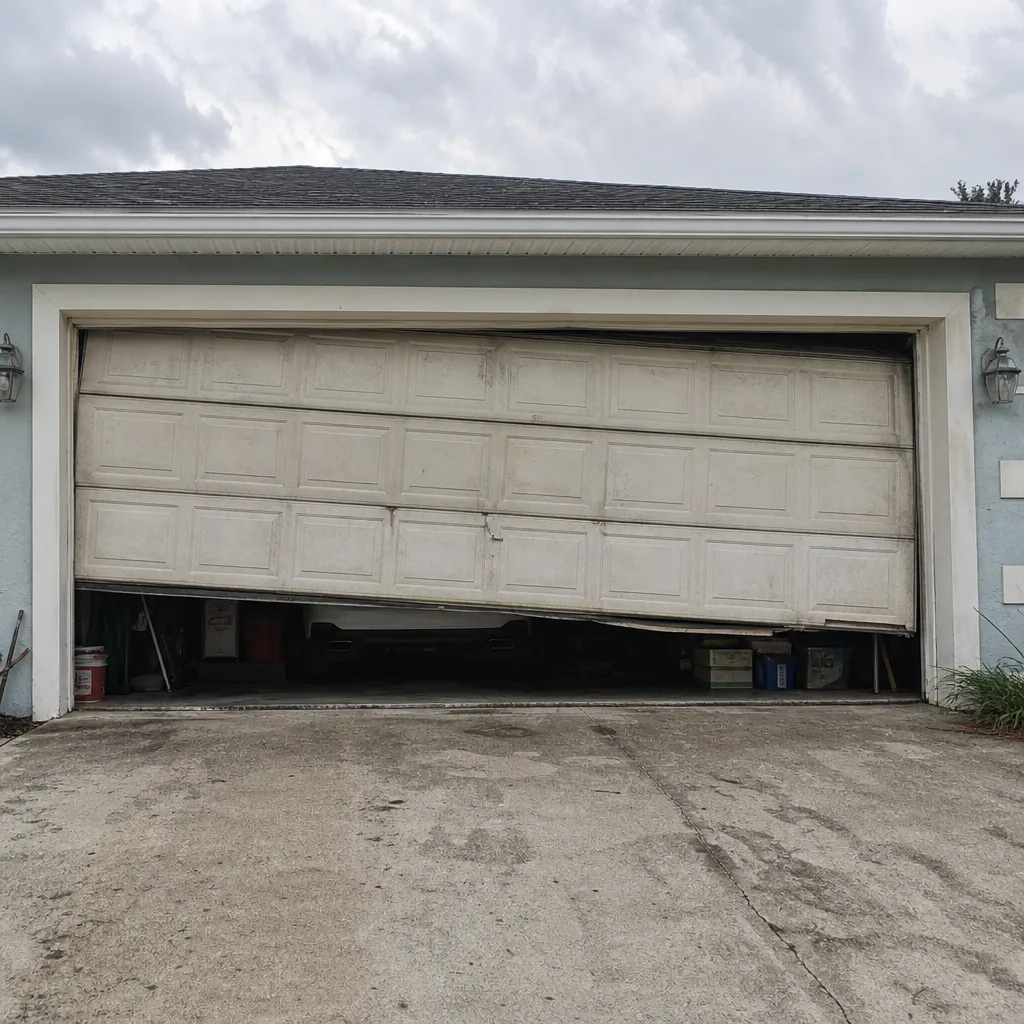 Before
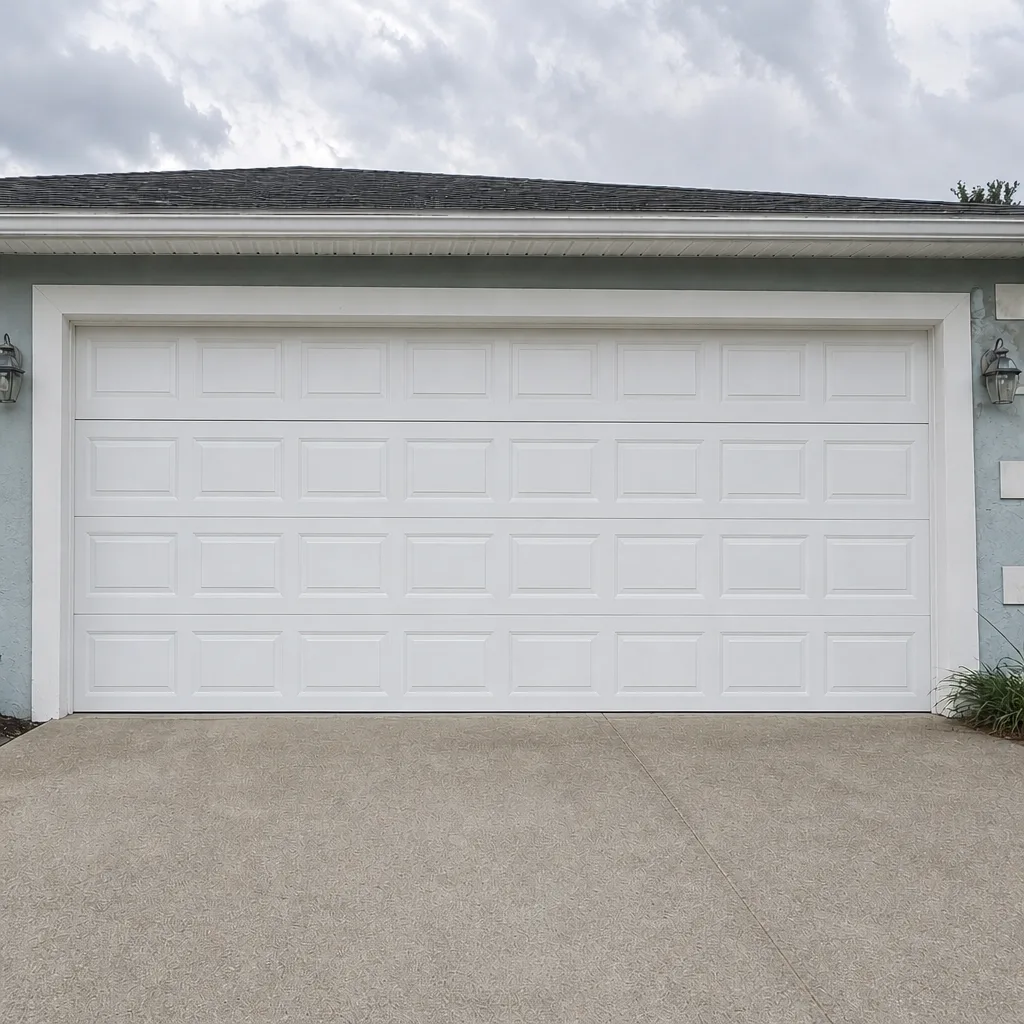 After
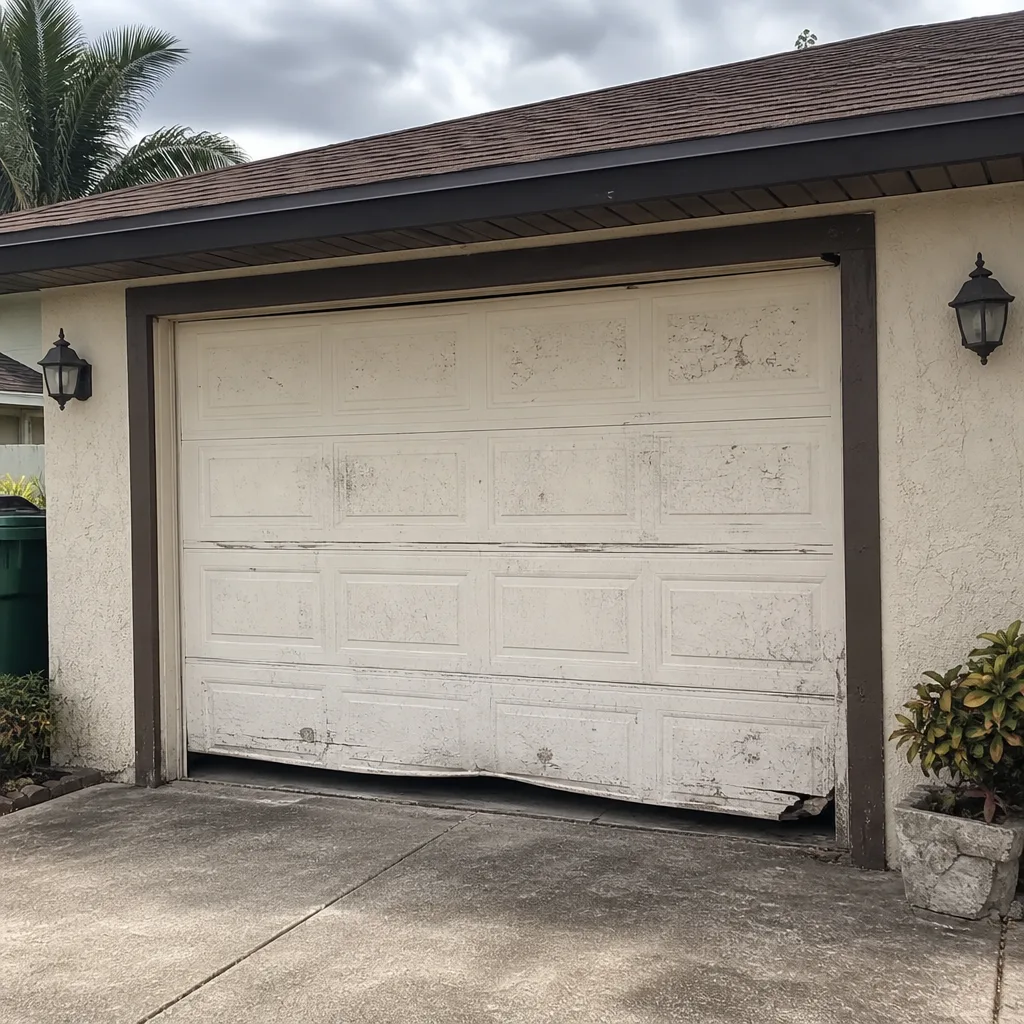 Before
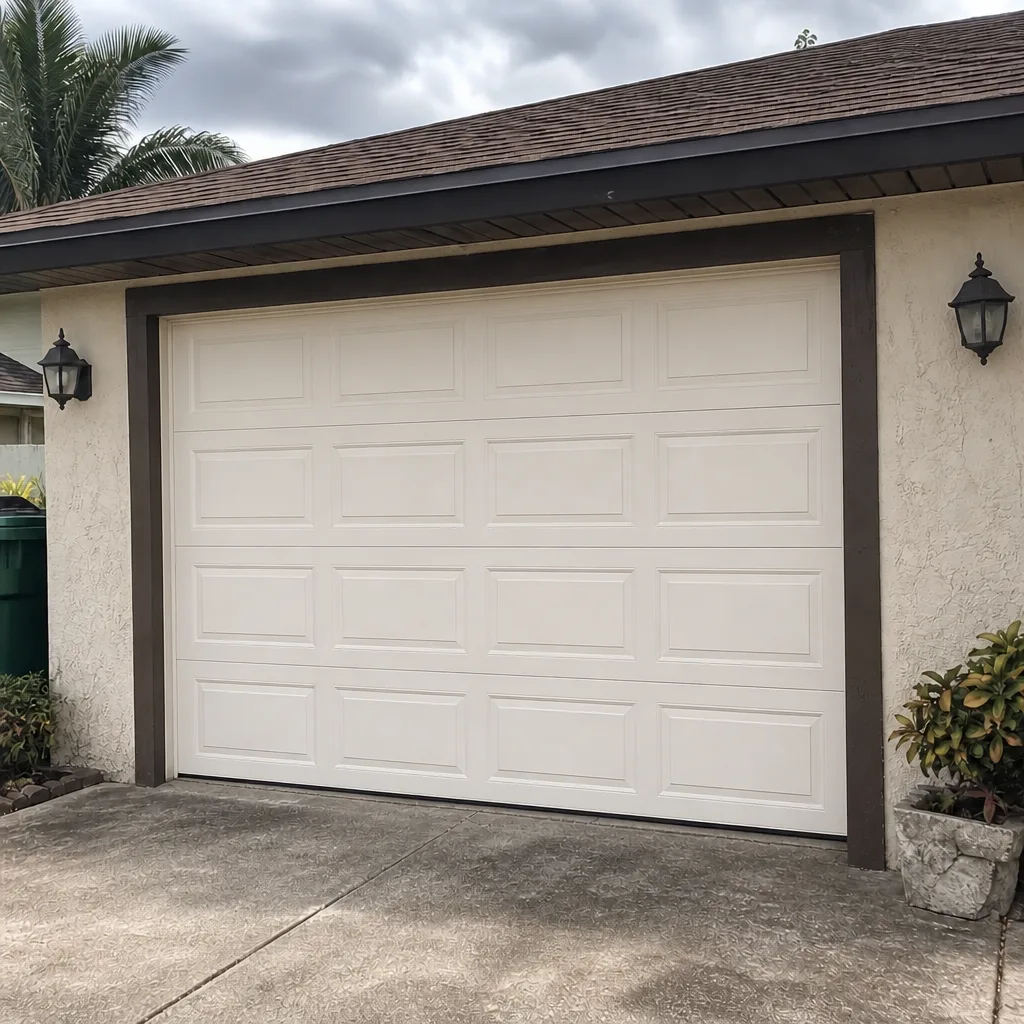 After
When to Call a Professional
Call a technician when the manual release won’t re-engage, when the door won’t close or open all the way, when a spring or cable is visibly damaged, when the door is off its tracks, when the opener makes a grinding noise or reverses unexpectedly, or when any inspection reveals structural damage. Spring failure is a safety issue, not an inconvenience, and it’s not a job for a homeowner. If you’re in Cape Coral and you’re unsure whether the door is safe, err on the side of caution. Garage Door Repair Cape Coral Pros offers free estimates in Cape Coral, and we can tell you on the visit whether the door is repairable or needs replacement. Call (877) 492-3592 for a free estimate; we quote and agree on the price before any work starts.
Frequently Asked Questions
Emergency repair in Cape Coral typically runs from about $150 to $450 for most opener or hardware issues, and spring repair is usually $180 to $340 for a single spring, with a matched pair of springs about twice that. The written estimate you get before any work starts is the price; call (877) 492-3592 for an exact quote, and estimates are free.
Yes, for repair calls we offer same-day service when the schedule allows, with fast dispatch from 7am to 7pm and {response} response. Call (877) 492-3592 and we’ll tell you what’s available.
No. We quote and agree on the price before any work starts. If the inspection reveals something the original quote didn’t cover, we stop and re-quote with you, so there’s no surprise invoice at the end.
The local pro is licensed and insured as their state requires, and our technicians have up to 12 years of experience with the major door and opener brands. We work on LiftMaster, Chamberlain, Genie, Clopay, Amarr, Wayne Dalton, Craftsman and Raynor systems.
Yes. Pull the manual release cord straight down with the door closed, then lift the door by hand. After power returns, re-engage the trolley by pulling it back toward the opener until it clicks, then test one full cycle before trusting it with a vehicle.
Don’t operate it. Inspect for bent tracks, broken springs, popped panels and pulled bolts; if any of those are present, stay out of the door’s path and call a technician. Then document everything with photos for your insurer and get a written estimate.
The Bottom Line
The homeowners who handle a garage door emergency well in Cape Coral are the ones who learned the manual release, cleared the travel path, photographed the door and tested the seal before the storm. The inspection after the storm matters just as much; a door that looks fine but has a bent track or a stretched spring will fail later, usually at the worst moment. Spring and cable work is never a DIY job. When you need a repair or replacement, get a free estimate and a written price before any work begins. One call covers the whole system, from opener electronics to door panels to mechanical springs. Call Garage Door Repair Cape Coral Pros at (877) 492-3592 for a free estimate.
Written by the team at Garage Door Repair Cape Coral Pros.