Last updated November 21, 2026
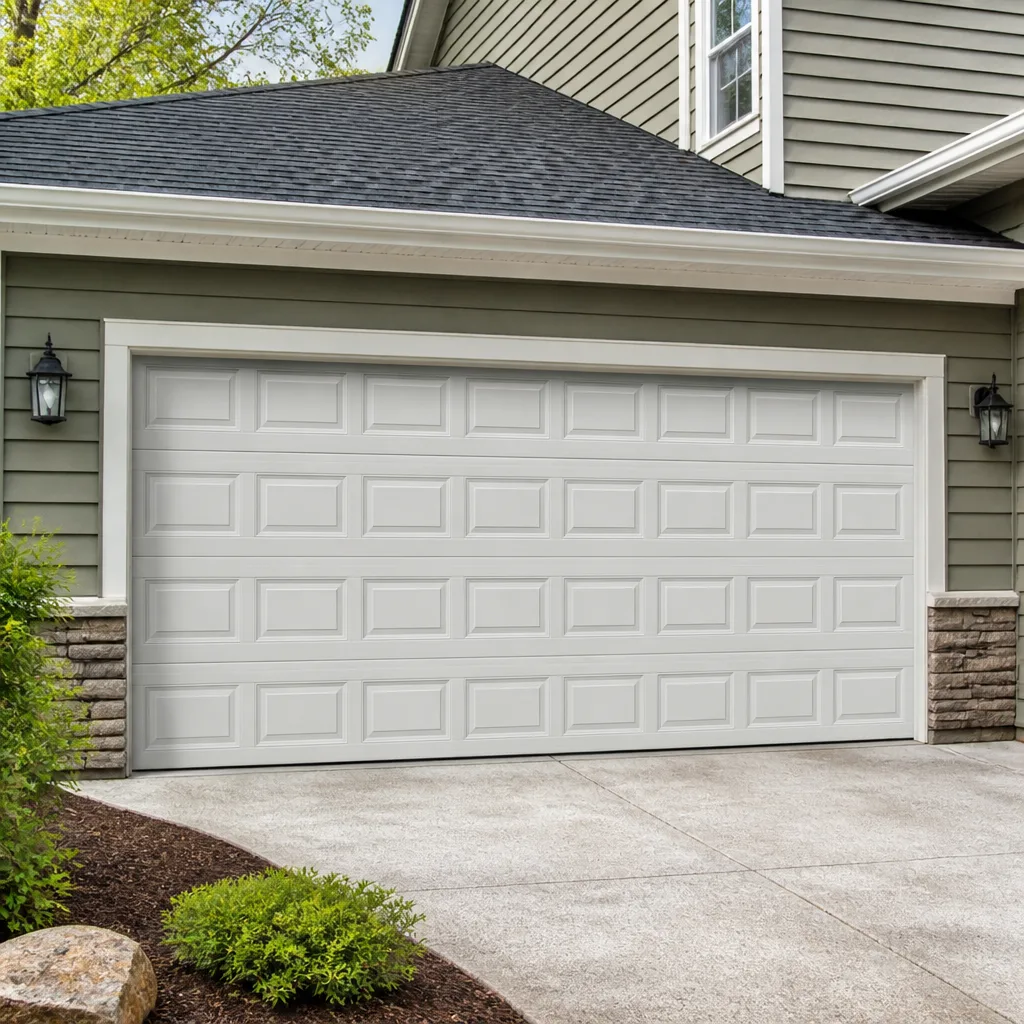 Raised-panel steel
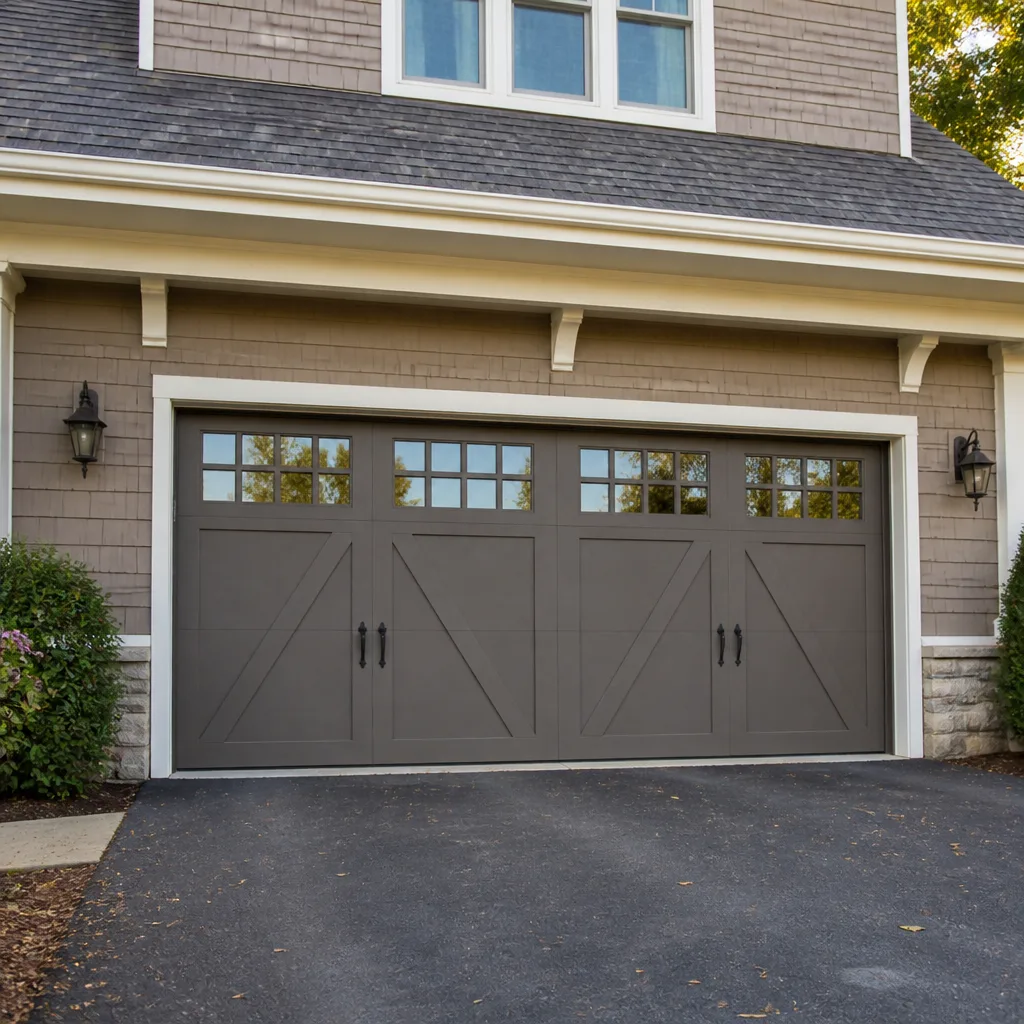 Carriage house
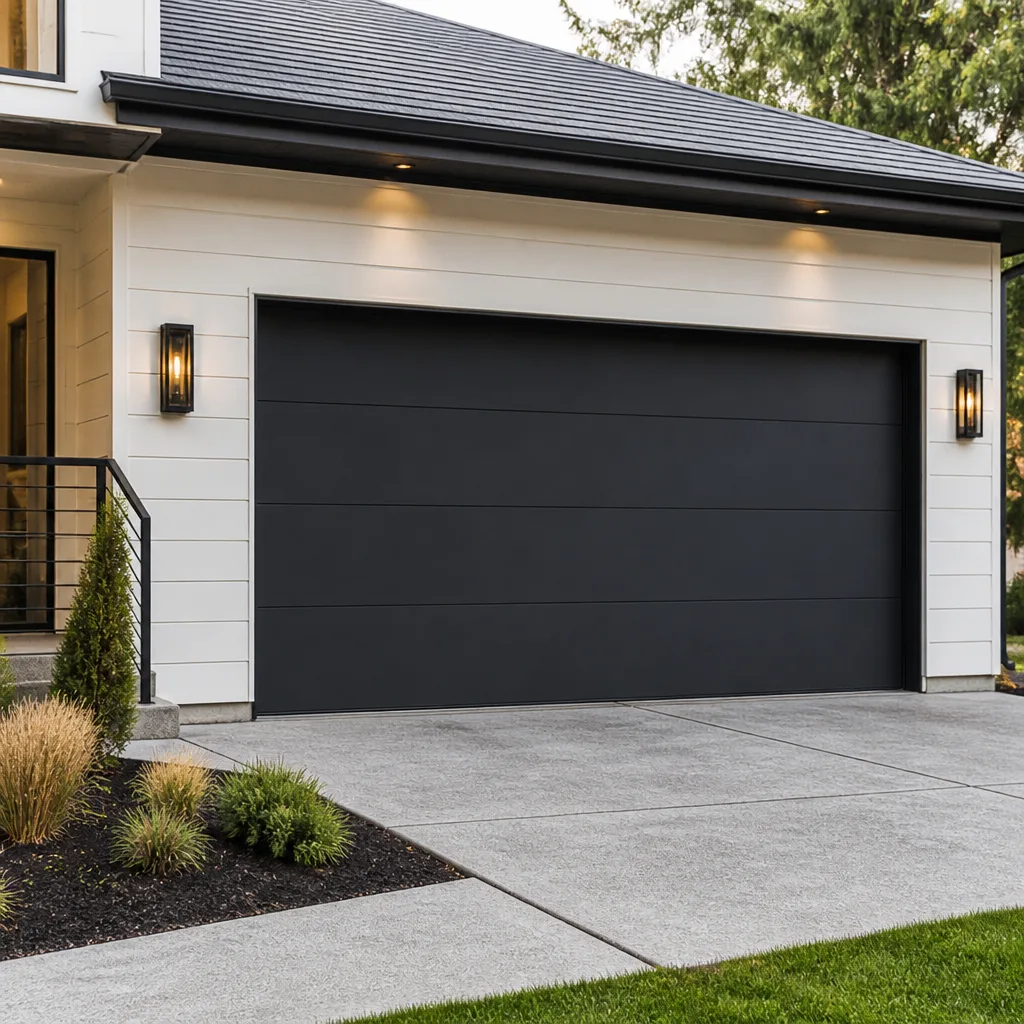 Modern flush
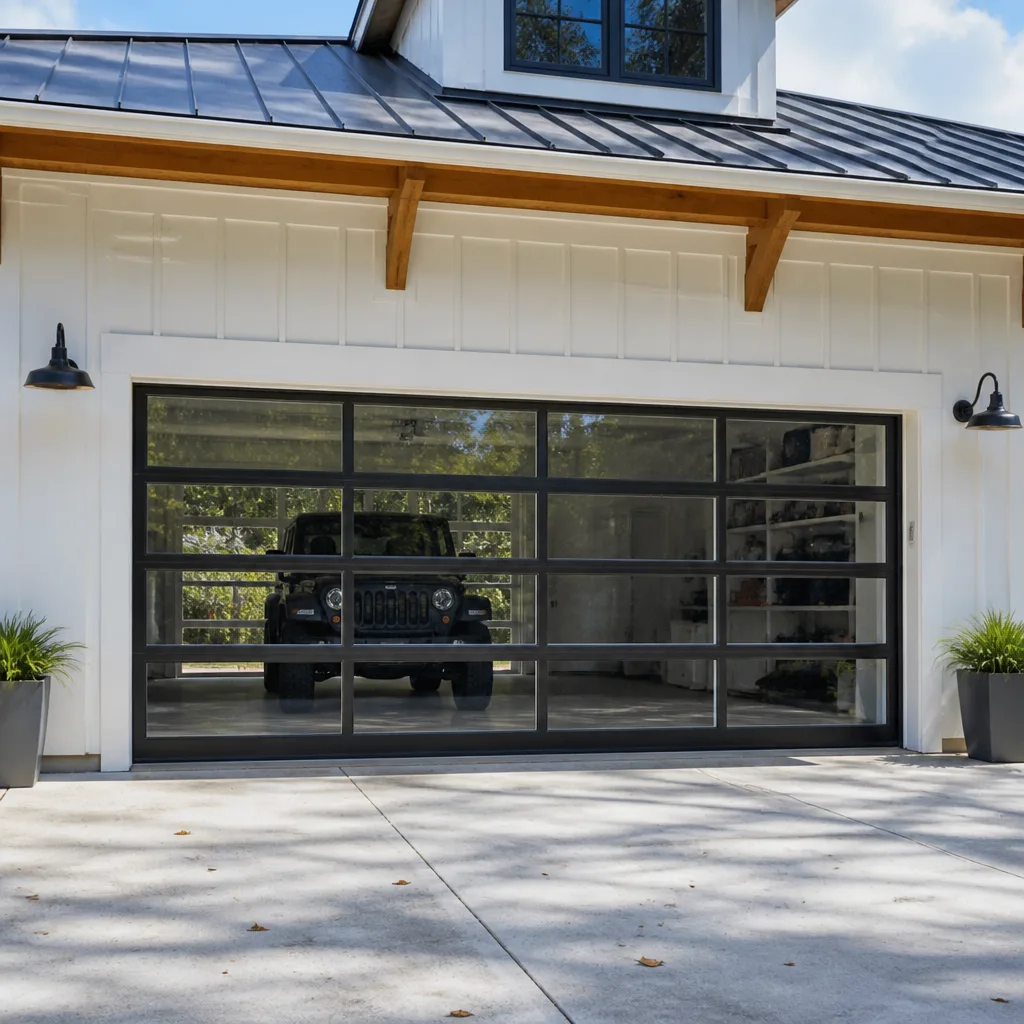 Full-view glass
 LiftMaster openers
 Chamberlain openers
Full 25-point door and opener safety check with every visit - springs, cables, rollers, tracks, and your LiftMaster or Chamberlain opener included
You get a price before we start. It does not change when the pro arrives.
Get your free estimateGarage Door Warning Signs: A Cape Coral Homeowner’s Reference Guide
A garage door that reverses before it reaches the floor is telling you something very specific. It’s also one of four different components that can cause that exact behavior, and misreading it is the most common reason a homeowner pays for a repair that never fixes the problem. Doors here don’t fail the same way they do up north. Cape Coral’s humidity, rain, and long warm season leave their own fingerprints: rust streaks, swelling wood, and cables that wear faster than the rest of the system. This guide walks through what each warning sign actually means, which ones need a call today, and which ones can wait for a scheduled visit. You’ll learn how a healthy door sounds and moves, so you spot trouble early.
Quick Answer
Garage door warning signs fall into two groups: urgent problems that need a professional now (a broken spring, a door that won’t stay up, a cable off its drum, a door that reverses on its own) and maintenance issues you can schedule (slow movement, new noise, a small floor gap, mild shaking). Most symptoms point to one specific component rather than the whole door. Catching them early in Cape Coral’s humid climate is what keeps a small fix from turning into a full replacement.
Styles & brands we work with
- Raised-panel steel
- Carriage house
- Modern flush
- Full-view glass
- LiftMaster openers
- Chamberlain openers
Table of Contents
- The Symptom-to-Component Matrix
- Urgent Warnings vs. Scheduled-Maintenance Warnings
- Warning Signs Cape Coral’s Climate Creates
- When the Opener Is Covering for a Mechanical Problem
- What a Healthy Garage Door Sounds and Moves Like
- Tension Problems vs. Track Problems: Telling Them Apart
- Brand-Specific Behavior Worth Knowing
- A Simple Monthly Check for Cape Coral Homeowners
The Symptom-to-Component Matrix
Most garage door problems announce themselves through one of five channels: noise, speed, reversal, a gap, or shaking. Each channel maps to a small set of likely parts. When a technician can read the symptom correctly, the repair is usually straightforward and stays small. When it’s misread, the wrong part gets replaced and the symptom comes back.
Here’s how the observable signs line up with the components behind them:
- A loud bang followed by a door that won’t lift – a torsion or extension spring has broken. The door becomes very heavy because the spring was doing most of the lifting.
- A door that reverses before it touches the floor – one of four things: an out-of-adjustment safety sensor, a misaligned or obstructed photo-eye, a track or roller binding that makes the door perceive resistance, or a bad limit setting in the opener itself.
- A grinding or scraping sound during travel – a dry or worn torsion spring, a roller that’s seized, or a hinge that’s working against a bent track section.
- A door that shakes or shudders as it moves – a bent panel, a track out of plumb, or a roller that has popped out of its channel.
- A visible gap along the bottom or sides – a damaged bottom seal, a warped panel, or a door that has slipped off its center track alignment.
- A door that moves slowly or stutters – often an opener motor straining against friction from worn rollers or a dry track, not a failing motor.
The value of the matrix is that it separates the four reversal causes, which are often confused. A door that reverses because of a sensor is a five-minute fix; a door that reverses because a track is pinching a roller is a mechanical repair. You want the second answer before anyone touches the system. If you’re already seeing a reversal and can’t tell which cause it is, a diagnostic visit for garage door repair sorts it out faster than guessing.
Urgent Warnings vs. Scheduled-Maintenance Warnings
Not every warning sign means “call today.” Some do. Getting the split right is what keeps a Cape Coral homeowner from either over-reacting to a minor noise or ignoring a real safety problem until it becomes an emergency. The line between the two is usually about whether the door can still be trusted to stay where it’s put.
These are urgent. Stop using the door and call a professional:
- The door will not stay up after you raise it manually. This almost always means a broken spring, and a door in this state can come down under its own weight.
- A spring is visibly broken or separated into two halves.
- A cable is off its drum, slack, or visibly frayed. Cables under tension are one of the most dangerous parts of the system.
- The door reverses or stops without any obstacle present, or reverses in the middle of travel.
- The door hangs crooked, one side higher than the other, which points to a cable or spring problem on one side.
- You hear a loud crack or bang from the door area and the door no longer operates normally.
These are scheduled maintenance. Book a service visit but keep using the door carefully:
- Slow movement or an opener that seems to work harder than it used to.
- A new squeak, groan, or rattle during travel.
- A small gap at the bottom of the door letting air or light in.
- Mild shaking that corrects itself after the first few feet.
- Rollers or hinges that look worn but still function.
If you’re not sure which category a symptom belongs to, describe it and a technician can usually tell you over the phone whether it’s a stop-using-it problem or a schedule-it problem.
Warning Signs Cape Coral’s Climate Creates
The climate in Cape Coral does specific things to a garage door that you won’t see in most national guides. The long humid season and heavy summer rain shorten the life of certain parts and create warning signs that look different from the generic “noisy door” list. Knowing them means you catch wear before it fails.
Rust staining on the floor below the springs. If you see reddish-brown staining on the concrete directly under a spring, that’s moisture working on the metal. In Cape Coral it happens faster during the rainy season, especially on doors in less ventilated garages. It’s an early warning that the spring coating is failing and that corrosion is starting on the hardware itself. A spring that’s rusting is a spring that’s more likely to break.
Cable wear that shows up as fraying. Humidity and repeated exposure to warm, damp conditions accelerate the wear that eventually weakens a cable. We’ve seen cables on Cape Coral doors fray well before their expected replacement interval because the garage interior stays humid for months at a time. A frayed cable is one to treat as a safety issue, not a cosmetic one. For the door side of that repair itself, you’ll want a specialized visit rather than a general handyman.
Humidity-swollen wood sections. On older doors with wood or composite framing, the seasonal humidity swells the wood, which changes how the door sits in its frame and can cause binding, sticking, or a panel that no longer closes flush. A door that suddenly drags on one side after a wet stretch is often showing you this.
Seal and gasket degradation. The bottom seal takes the most abuse from heat and moisture. A cracked or stiff seal lets water in, which then works on the metal below.
The takeaway for Cape Coral: look at the garage floor and the spring hardware periodically, not just the door itself. If you’re seeing rust or fraying, a spring and cable evaluation moves to the top of the list. For spring work specifically, we treat it as a core service because it’s one of the most hazardous DIY garage door tasks there is. A trained technician handles it; a homeowner should not.
When the Opener Is Covering for a Mechanical Problem
An opener that seems weak is often not the problem at all. It’s the part of the system that’s been compensating for something else, and the mechanical issue shows up as an opener symptom because that’s the component doing the extra work. This is one of the most misdiagnosed situations in garage doors. Replacing the opener feels like the fix; it usually isn’t.
Here’s what to look for. These signs point to the opener struggling against friction elsewhere in the system:
- The door lifts slowly and unevenly, then works perfectly by hand. That means the opener motor is fighting a mechanical load, most likely worn rollers or a dry track.
- The opener cuts out partway through a cycle. Many openers have built-in force limits that shut the motor off when resistance spikes. That cutoff is a symptom of a binding door, not a broken opener.
- The opener reverses at roughly the same spot every time. If there’s no obstacle and the photo-eye is clean, the resistance is coming from the track or rollers.
- The opener seems louder or runs longer than it used to. The motor is doing more work to move the same door.
- The opener’s safety reverse feature trips without an obstacle. This is almost always mechanical resistance the opener is interpreting as an obstruction.
The diagnostic move is the same every time: raise and lower the door by hand with the opener disconnected. A healthy door balances and moves smoothly. If it feels heavy, sticks, or resists, the mechanical side needs attention first. If it glides and the opener still misbehaves, then the opener itself is the suspect.
That’s where brand familiarity earns its keep. LiftMaster and Chamberlain units, which share a great deal of internal design and use the MyQ system for smart-home control, tend to report the same family of error codes when they’re compensating for resistance. Craftsman openers running on legacy systems behave differently again, and a technician who works with all of them reads the behavior rather than guessing. For the electronics side specifically, garage door opener repair is where that diagnostic work happens. One call covers the opener and the mechanical system together, which is the point.
What a Healthy Garage Door Sounds and Moves Like
You can’t recognize deviation until you know the baseline. A healthy garage door has a predictable rhythm and sound, and once you know it, changes stand out immediately. Here’s the baseline to compare against.
Sound. A well-maintained door makes a consistent, low hum from the opener and a soft roll from the rollers in the track. There’s no banging, grinding, scraping, or sudden crack. A quiet rhythmic tick from a roller is normal; a new squeal, groan, or rattle is not. In Cape Coral, where the garage often opens into warm outdoor air, some seasonal change in how the door sounds is normal. A brand-new persistent noise is not.
Movement. A healthy door moves at a steady pace, doesn’t visibly shake, doesn’t hesitate, and stops cleanly at both limits. It glides – it does not lurch. When it reaches the floor, it seats evenly along the full width with no gap on one side. When it’s raised, it sits level.
Balance. A properly balanced door can be raised manually about halfway and will hold there when you let go. It doesn’t drop and it doesn’t shoot up. This is the single most useful check you can do, and it’s the one that most clearly tells you whether the spring system is healthy. It’s also a fast way to know whether the door is safe to keep using while you wait for a service visit.
Responsiveness. A healthy door reverses when something is in its path, stops when the sensor is blocked, and doesn’t do either of those things when nothing is there. If it reverses with a clear floor and a clean sensor, that’s the “four causes” reversal from the matrix, and it needs diagnosis.
Spend thirty seconds watching and listening to your door during a normal cycle. That thirty seconds is the difference between catching a small issue early and discovering a broken spring on a busy morning.
Tension Problems vs. Track Problems: Telling Them Apart
This is the distinction that prevents the most expensive misdiagnoses. Tension problems and track problems can look similar – both cause shaking, both cause binding, both cause a door that won’t run clean – but they involve completely different parts and completely different risk. Getting it wrong means replacing components that weren’t the issue.
Tension problems come from the springs and cables. The tell-tale signs are:
- The door feels very heavy when you raise it by hand, or won’t stay halfway.
- The door sits crooked, with one side higher than the other.
- A cable is slack, off its drum, or frayed.
- The door drops rather than lowers smoothly.
- You hear a bang from the spring area.
Track problems come from the metal rails the door travels in, plus the rollers and hinges that ride them. The tell-tale signs are:
- The door binds or sticks at a specific spot in its travel.
- A roller has visibly popped out of its channel.
- The tracks look bent, dented, or out of alignment.
- The door rubs or scrapes along one side.
- The door runs smoothly by hand until it reaches one particular point, then catches.
Here’s the practical rule: if the door is heavy, crooked, or drops, suspect tension and treat it as urgent. If it’s light but catches, sticks, or scrapes, suspect track and schedule it. And if both are happening, tension gets handled first, because a crooked door is a load problem.
The reason this matters is safety as much as cost. Springs and cables hold and release enormous energy. They are the parts a homeowner should never adjust, tighten, or replace. A trained professional is the only person who should touch them, and we say that plainly because it’s true, not to sell a service. Track work involves less stored energy but still needs correct alignment, which is why it belongs in the same visit.
Brand-Specific Behavior Worth Knowing
Brand-specific behavior is real. Doors and openers from different manufacturers show their problems in different ways, and knowing the difference is how a technician diagnoses rather than guesses. We work across eight major names – LiftMaster, Chamberlain, Genie, Clopay, Amarr, Wayne Dalton, Craftsman, and Raynor – and read each one on its own terms.
It’s not one brand being better than another; it’s that each system has its own failure patterns, its own error reporting, and its own parts chain. Here’s how brand familiarity changes the diagnosis:
- LiftMaster and Chamberlain openers share platform design and use the MyQ smart-home system. Their error codes often report resistance in a way that points a technician straight to the mechanical load rather than the electronics.
- Genie openers, including the Aladdin-connected models, have their own behavior around limit settings and force limits that reads differently from a LiftMaster or Chamberlain unit.
- Craftsman openers still run in huge numbers in older homes. Their legacy behavior around the safety reverse and travel settings is its own thing.
- Raynor doors and their hardware have specific spring and track configurations that matter when sourcing the right replacement.
- Clopay and Amarr doors show panel and section wear differently depending on which line a home has, which changes how a warped panel is detected and fixed.
- Wayne Dalton doors have their own hinge and roller behavior that affects where binding shows up first.
Why it matters to a homeowner in Cape Coral: when you call, the technician should know your exact system rather than treating every door the same. That’s where the difference between a specialist and a generalist shows up. It also ties into parts. If the technician already knows your system, the right part can often come on the same visit, which is why we handle parts supply as part of the service rather than sending you to a big-box store mid-repair. If you’re thinking about a full replacement rather than another repair, that same brand knowledge shapes garage door installation, because the right door for your home depends on the opening, the frame, and how you actually use the garage.
A Simple Monthly Check for Cape Coral Homeowners
You don’t need a lot of equipment to catch problems early. A monthly check of a few things, repeated the same way each time, will surface change before it becomes a failure. Here’s the routine, in order:
- Watch and listen. Run one full open-and-close cycle and watch the door all the way through. Listen for any new sound and note any shaking, hesitation, or slowdown.
- Look at the floor below the springs. Any reddish-brown rust staining is a warning that the spring hardware is corroding.
- Check the cables by eye. Look for fraying, slackness, or a cable sitting off its drum. Do not touch or adjust a cable under tension.
- Test the balance. Disconnect the opener, raise the door about halfway, and let go. It should hold. A door that drops or shoots up needs a professional.
- Test the safety reverse. With the door open, pass an object through the photo-eye path and confirm the door responds. A door that reverses with nothing in the way needs diagnosis.
- Look at the bottom seal. A cracked, stiff, or gapping seal lets water in and needs replacing.
- Check the tracks. Look for bends or dents and make sure each roller is sitting in its channel.
Do this in Cape Coral before and after the humid season, since that’s when the wear accelerates. If any single check fails, treat that item as the priority for a service call.
Common Mistakes to Avoid
- Assuming a reversing door means a sensor problem. The most common reversal mistake in Cape Coral is replacing the photo-eye when the actual cause is a track binding a roller. Test with the floor clear before deciding it’s the sensor.
- Replacing the opener when the door is stiff. A slow door that moves freely by hand is a mechanical problem. Replacing the motor first is the most common reason for a repair that doesn’t fix the noise or the strain.
- Treating a broken spring as a “wait and see” issue. A door with a broken spring should not be operated. Leaving it in use risks the door dropping.
- Putting off rust checks in a humid climate. Rust staining below a spring in Cape Coral is an early sign that the season has done its work. Waiting another month often means another failure.
- Adjusting or tightening springs yourself. This is the one maintenance step a homeowner should never take on. Springs carry stored energy that can cause serious injury. Call a trained professional.
- Assuming brand behavior is universal. A Genie error code reads differently from a LiftMaster one. Treat your specific system on its own terms rather than comparing notes with a neighbor’s make.
- Calling a general handyman for a spring or cable repair. This is specialized, safety-sensitive work, and not every generalist is equipped for it.
See the difference
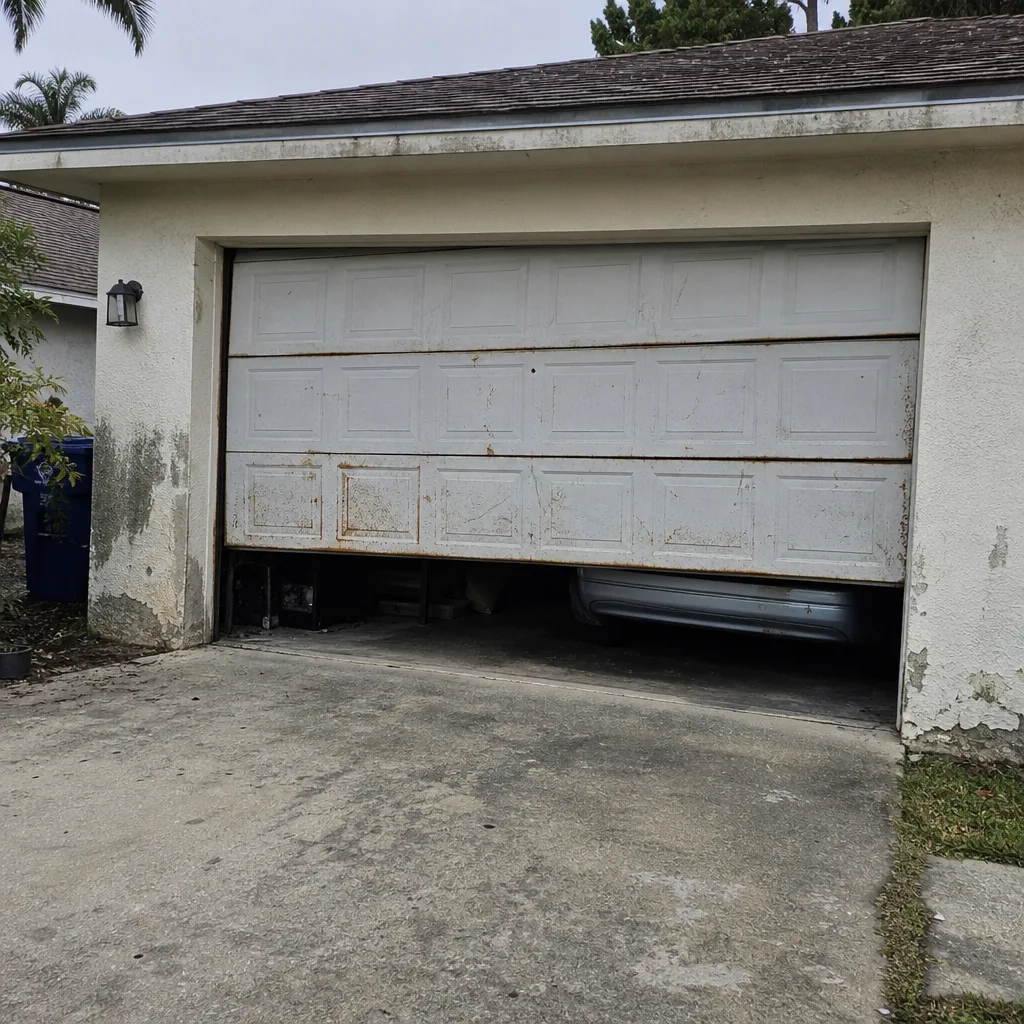 Before
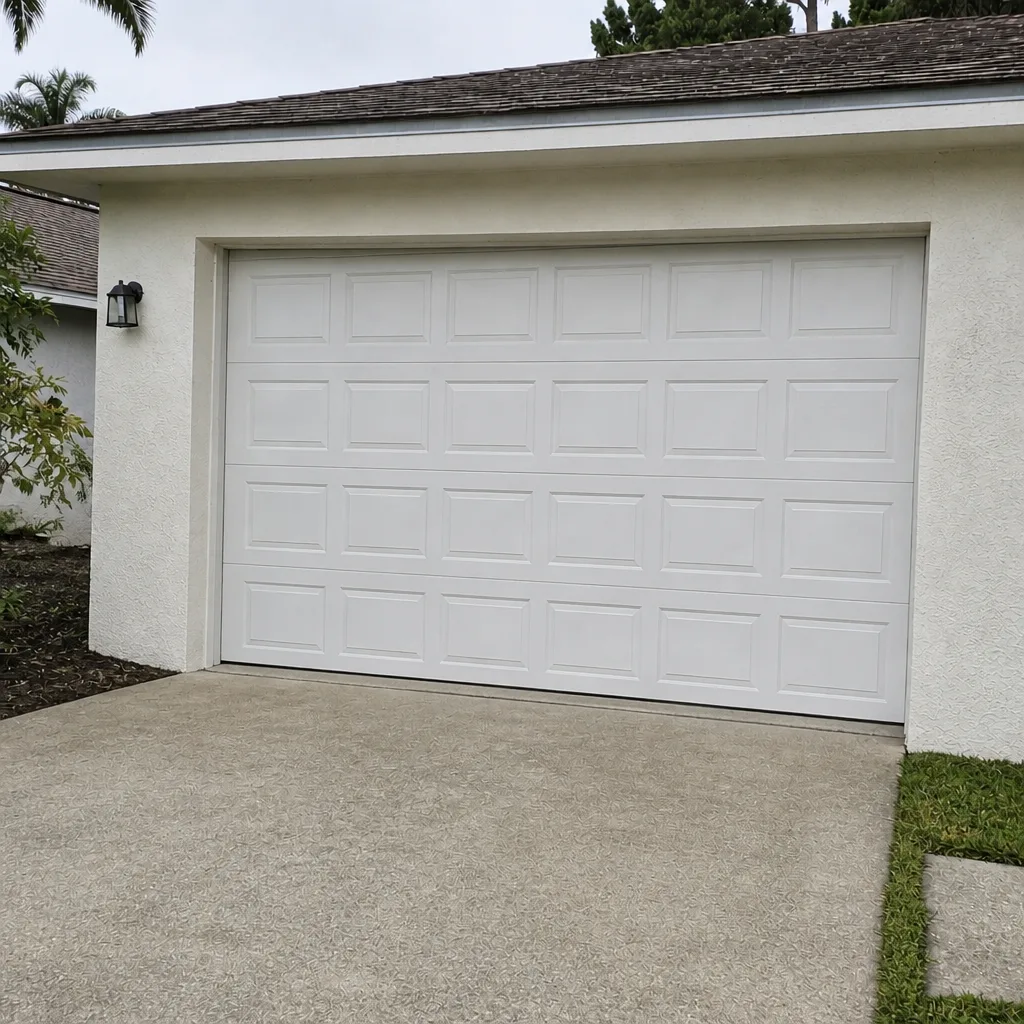 After
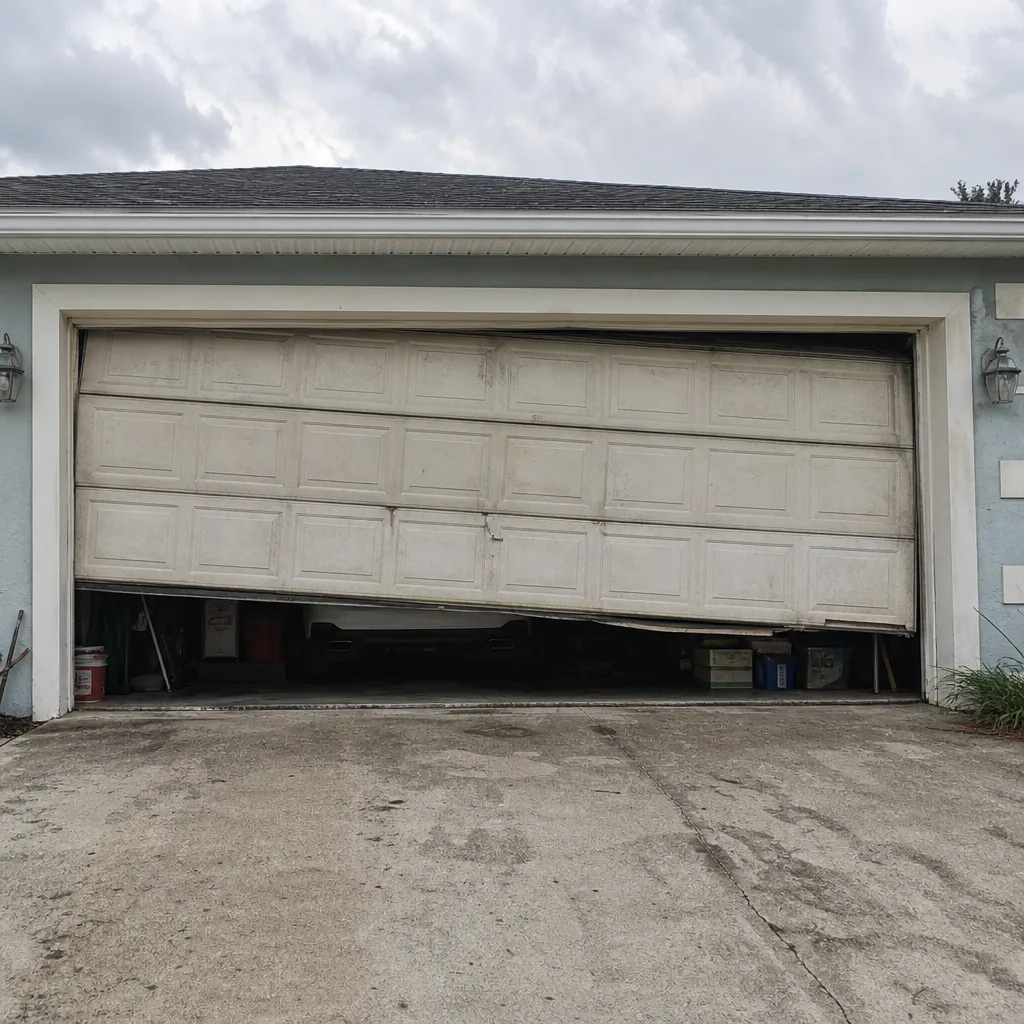 Before
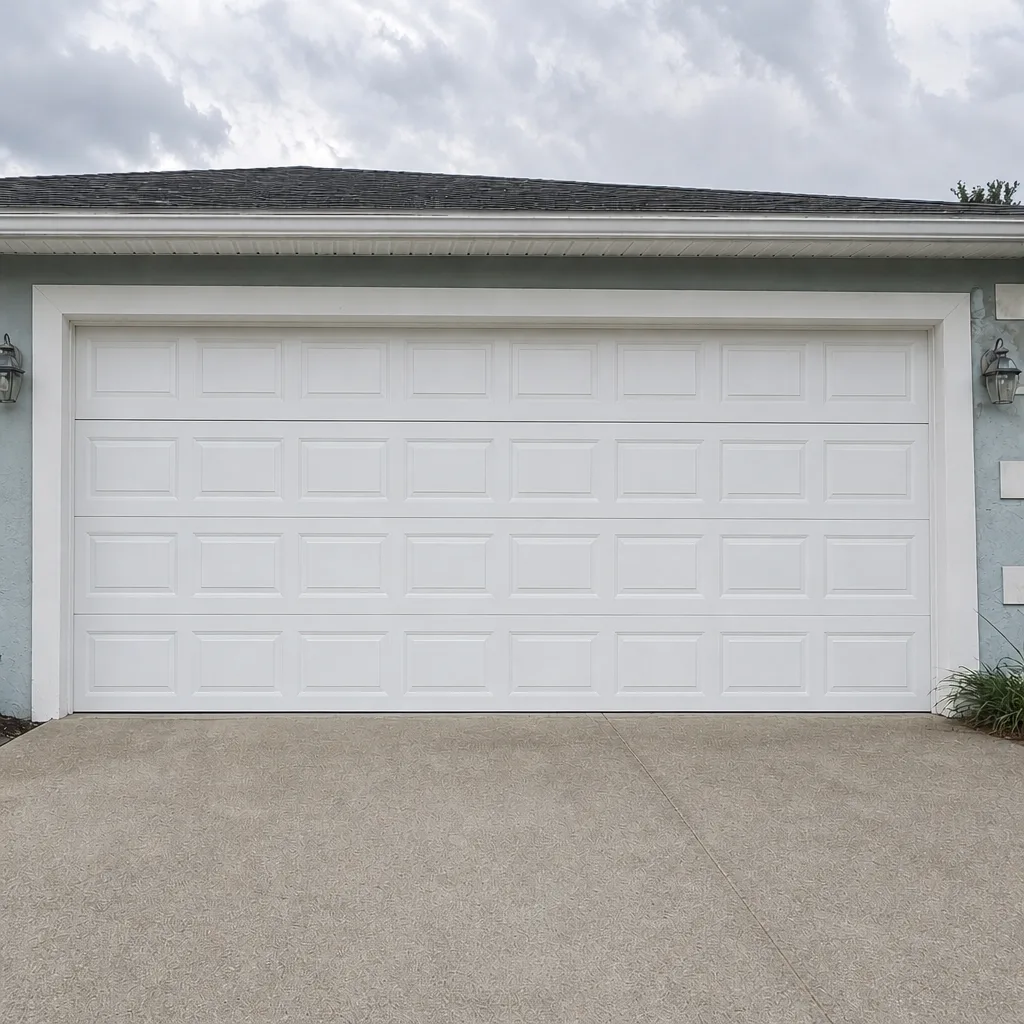 After
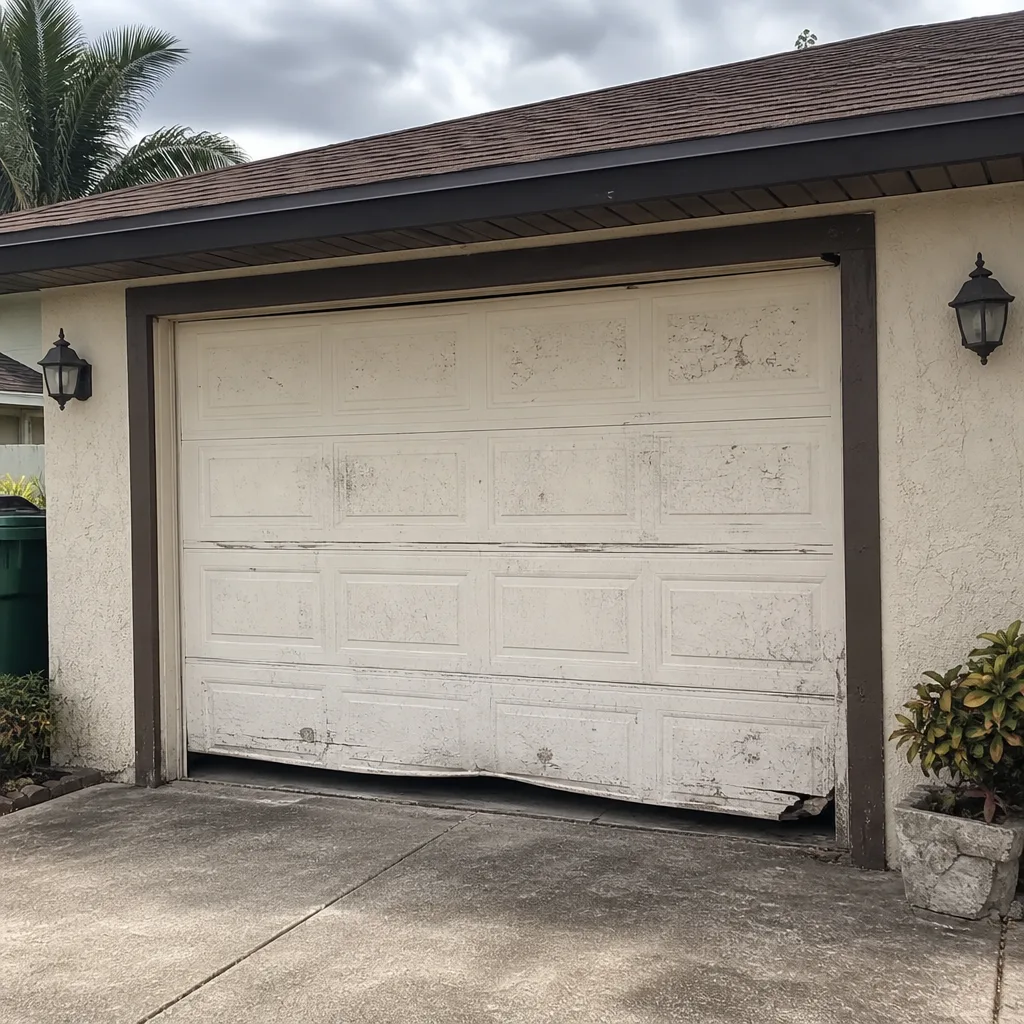 Before
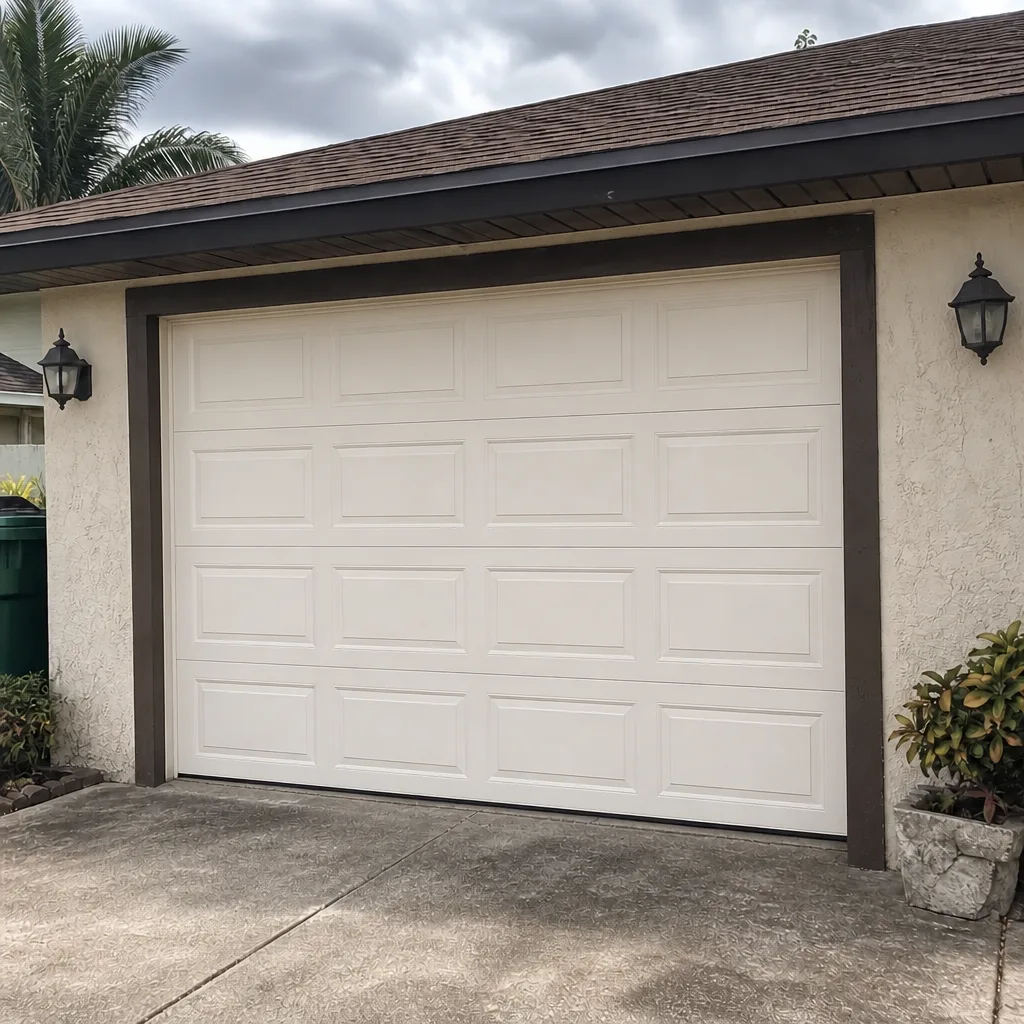 After
When to Call a Professional
Call a professional the same day if the door won’t stay up, a spring has broken, a cable is off its drum or frayed, or the door reverses with nothing in the way. Those are the urgent signs, and using the door in that state is what turns a repair into an emergency. Schedule a visit if the door moves slowly, makes new noise, shakes mildly, or has a gap at the bottom. And call before the spring fails if you see rust on the floor or on the hardware, because catching it early is the whole point of knowing the warning signs. Garage Door Repair Cape Coral Pros offers free estimates in Cape Coral. We work across eight major door and opener brands and handle springs, cables, tracks, openers, and parts on the same visit wherever the diagnosis allows. For an exact quote on a specific warning sign you’ve spotted, call (877) 492-3592.
Frequently Asked Questions
A door that reverses before reaching the floor has one of four causes: an obstructed or misaligned photo-eye, a track or roller binding, a bad limit setting in the opener, or a mechanical resistance the opener reads as an obstruction. The fix is different for each, so the right first step is a diagnostic visit rather than replacing the sensors on guesswork. Call (877) 492-3592 for a free estimate – estimates are free.
A broken spring, a cable off its drum or frayed, a door that won’t stay up after you raise it, or a door that reverses without an obstacle are all stop-using-it signs. A door that sits crooked or drops rather than lowering smoothly belongs in that group too. Any of these deserves a same-day call. Call (877) 492-3592 to book a diagnostic.
Yes – the local professionals we connect you with are licensed and insured as their state requires, and our technicians have up to 12 years of experience across eight major garage door and opener brands. We confirm licensing and insurance coverage as part of matching you with the right professional. Call (877) 492-3592 with any questions about a specific visit.
A slow garage door is usually a mechanical problem, not a dying opener – worn rollers or a dry track increase friction, and the opener motor compensates by working harder. To tell the difference, disconnect the opener and raise the door by hand: if it feels heavy or sticks, the door is the issue. If it glides freely and the door still runs slow, the opener is the suspect. Call (877) 492-3592 for a free estimate.
A new squeak, rattle, or groan during travel is a scheduled-maintenance warning, not an emergency, and you can keep using the door carefully while you book a visit. The exception is a loud bang or crack followed by a change in how the door operates; that’s urgent. In Cape Coral’s humidity, a new noise often points to a dry spring or a worn roller, both of which are simple at the right time and expensive if ignored. Call (877) 492-3592 to schedule.
Spring pricing is quoted per spring, and the written quote before any work starts is the final price – so there’s no surprise on the invoice. Because springs are usually replaced in a matched pair, the pair cost usually reflects two springs rather than one. A free estimate from a specialist gives you the exact figure for your door. Call (877) 492-3592 for a free estimate.
The Bottom Line
Garage door warning signs are almost never random – each one points to a specific component, and reading them correctly is what keeps a small repair from becoming an emergency. Urgent signs (a broken spring, a cable off its drum, a door that won’t stay up, a door that reverses on its own) mean stop using the door and call the same day. Scheduled signs (slow movement, new noise, mild shaking, a small gap) get booked and handled carefully. In Cape Coral, watch for rust staining below the springs and frayed cables, because the humid climate accelerates that wear. Know your door’s healthy baseline and the changes stand out. When in doubt, a specialist diagnoses rather than replaces. Garage Door Repair Cape Coral Pros offers free estimates – call (877) 492-3592. For broader repair help, start with Garage Door Repair Cape Coral Pros.
Written by the team at Garage Door Repair Cape Coral Pros.